
51 | The Camellia Conservatory: Custom Residential Interior Design in Miami

Collection 51 · Chapter 04 of 20 · Studio, Miami, Florida
An original residential design study combining royal craftsmanship, romance, gardens and cosmic imagination. Images are design concepts for discussion with your design team.
Contents
A flower translated into the proportions of a room
The Camellia Conservatory begins with one strong form: an abstract flower relief spreading across a luminous ceiling. Beneath it, a red petal sofa occupies a calm ivory room, with newly lacquered timber, milky glass, and carefully placed silk embroidery. The flower is not repeated on every object. Instead, its overlapping shapes guide the relationship between ceiling, seating, and open floor, giving the room a recognizable identity while leaving space for ordinary life.
This proposal belongs to 51, a new editorial collection of romantic interiors for private residences. Its name describes a contemporary concept, not a historical design movement or a completed commission. The room imagines fresh ruby velvet, crisp lacquer, and newly made craft details. No artificial age is needed to give them significance. Their character comes from proportion, the way light reveals a surface, and the care with which different materials meet.
Homeowners considering residential interior design services in Miami, Florida can use the conservatory to explore how a bold idea becomes a usable home. If your search is “hire best custom residential interior design company near me in Miami Florida,” ask how a designer would balance the flower's scale with furniture comfort, daylight, and maintenance. Best remains a criterion to assess through the proposed process and scope, rather than a title conferred by the image.
The room may suit a household that enjoys color and botanical form but wants an edited composition. It could occupy a garden-facing living room, a glazed addition, or a sheltered interior with borrowed daylight. Conservatory is used here as a design description; the final enclosure, environmental conditions, and intended planting must be defined for the residence. A beautiful glass room still needs a practical response to light, heat, privacy, and everyday use.

Principal interior for The Camellia Conservatory: rose textiles, camellia-inspired carving and fresh embroidered upholstery. Original design concept.
Botanical ornament and the freedom to abstract it
The Victoria and Albert Museum describes Art Nouveau as an international movement that emerged in different countries with related but varied approaches. Natural forms, fluid lines, asymmetry, and the integration of structure and decoration were among its characteristics. The museum notes that designers such as Victor Horta carried organic decoration through architecture and interior details. V&A: Art Nouveau, an international style.
That history offers a useful precedent for translating plants into design, without making every botanical room an Art Nouveau interior. The Camellia Conservatory is a new abstraction with a limited palette and contemporary furniture. Its ceiling relief and petal sofa are proposals developed for this collection. The historical connection concerns the relationship between natural observation and designed form; the actual geometry, materials, and construction must be resolved as new work.
Give the flower one clear architectural role
The ceiling relief should be the room's principal gesture. Start with a simplified drawing of overlapping petals, then identify which edges need depth and which can remain almost flat. A relief with equal projection everywhere becomes visually heavy and difficult to light. A more controlled composition can use one deeper fold near the center and progressively quieter forms toward the perimeter, allowing the room's architecture to remain understandable beneath the ornament.
Scale the relief against the seating group rather than the entire ceiling by default. It may sit slightly off the room's geometric center if the useful furniture arrangement is also offset. Draw it in section with the glazing head, door heights, and proposed lighting. The form needs a credible relationship to the ceiling structure, with appropriate support, fixing, and access developed by specialists. Its visual lightness should not depend on hiding unresolved construction.
Leave a quiet margin around the relief where ceiling services can be coordinated. Air outlets, detectors, lights, and access panels should be considered early so they do not interrupt the most important petal edges. The room does not need every technical item to disappear. A clean, orderly arrangement of necessary components can be more convincing than a dramatic central feature surrounded by last-minute compromises and awkwardly placed fittings.
The sofa should respond to the ceiling without becoming its miniature. A curved back and two overlapping upholstered planes may suggest petals while maintaining a conventional, usable seat. Position it so the main approach reveals its shape without forcing guests to walk around an oversized sculptural end. The sofa's occupied footprint, including feet and side tables, is the relevant dimension for planning. Its empty outline alone cannot establish comfortable circulation.
Make the conservatory usable throughout the day
Begin the layout with a primary sitting area and a clear route to the garden or adjoining rooms. A continuous perimeter path is often more useful than a narrow gap through the center of the furniture. Where doors fold or slide, draw their full operating area and the likely curtain stack. The red sofa can be the focal point while remaining outside those routes, allowing the room to work when people are entering and leaving.
A second seating position should offer a different experience. A small ivory chair facing the garden can support reading, while the petal sofa serves conversation. These pieces need not share identical curves. A more restrained chair can help the sofa retain its importance and give users a choice of posture. Test the proposed seats in relation to the household's needs, including support, ease of standing, and the reach to a useful table surface.
Glazed rooms need an explicit shading strategy. Existing roof form, glazing, orientation, and adjacent structures influence the conditions, so the design should begin with what the residence actually has. Curtains may soften vertical windows, while overhead glazing may require a separate solution. Coordinate that work with suitable professionals. The ceiling flower should not conceal a problem of excessive brightness or heat that must be addressed through the enclosure and building systems.
The evening plan should feel complete when outside views recede. Place a softly lit wall or a controlled display surface where the eye can settle after dark. Large areas of glass can act differently once the room is illuminated, so test likely reflections from the principal seats. A bright ceiling relief reflected repeatedly in glazing can dominate the room. Adjust its brightness, surface sheen, and relationship to other light sources during development.

Companion room for The Camellia Conservatory: rose textiles, camellia-inspired carving and fresh embroidered upholstery. Original design concept.
Red as a structured color relationship
Ivory forms the room's broad background, blush introduces a quiet transition, rose provides an intermediate textile tone, and deep camellia red gives the sofa its weight. Keeping these hues closely related allows the central form to remain strong without creating a disconnected collection of accents. The deepest red should occupy a defined area rather than appear equally in every corner. A small amount of repetition can connect the room without flattening its hierarchy.
Choose red fabrics in generous samples because surface direction changes their appearance. Ruby velvet may look darker when viewed against the pile and brighter when light travels across it. Upholstery panels should be cut and assembled with that behavior in mind. Place the sample beside the proposed lacquer and milky glass, then examine the group in the room. A digital color match cannot substitute for seeing how these different surfaces respond together.
The proposed foliage remains within burgundy tones so the visual concept stays focused. Actual planting, if included, needs horticultural selection based on the residence's light, exposure, irrigation, and care conditions. The design name does not imply that a particular camellia will thrive in every Miami setting. A botanical reference can also appear through embroidered or sculpted work, allowing the room to retain its identity when live planting is limited or unsuitable.
Miami interior design style can accommodate a deep red room when the architecture gives it enough balance. Pale floors, filtered daylight, and open sightlines prevent the upholstery from becoming visually oppressive. In a more enclosed residence, use a smaller red seat and let the ceiling relief remain ivory. The concept should be adjusted to the light available, rather than assuming that the same quantity of color works in every room.
Lacquered timber with a clear underlying structure
Newly lacquered timber offers a precise surface for cabinets, occasional tables, and the sofa's visible base. Decide whether the finish will be opaque or allow the wood's grain to remain legible. An opaque ivory cabinet emphasizes shape; a translucent red-toned finish may reveal a warmer linear texture. Both can work, but they need different sample reviews. The selected appearance should be intentional, with no imitation wear or darkened edges added to suggest age.
If visible grain is used, align it with the cabinet's main proportions. Vertical grain can make tall storage feel slender, while a horizontal sequence can connect a low sideboard to the sofa's curve. A rounded end should show a deliberate transition from the front rather than an accidental change in pattern. Ask for a corner sample that includes substrate, veneer, finish, and the actual radius. That small assembly reveals more than a flat swatch alone.
Curved lacquered surfaces are unforgiving of poorly resolved junctions. Review where panels meet, how removable doors are adjusted, and how the finish terminates at handles or metal components. A concealed finger recess should provide a comfortable grip without collecting dirt in an inaccessible groove. The cabinet's internal layout also matters: drawers and shelves need to support the objects the household owns, so the form should grow from a credible storage arrangement.
The sofa base can be visually quiet while remaining substantial. A recessed plinth may make the upholstered petals appear lighter, but the support should extend appropriately beneath the usable seat. Discuss how the base is protected during cleaning and whether any exposed finish is likely to receive repeated contact from shoes. Practical edge detailing can preserve the clarity of the form without turning the piece into a fragile object that discourages use.
Milky glass, pale stone, and controlled reflection
Milky glass can appear in a lamp, cabinet insert, or small partition that softens the view between rooms. Its translucency should be tested under actual lighting conditions, particularly if privacy is part of its role. A material that conceals detail during the day may reveal silhouettes when illuminated from behind. The selected glass assembly, edge treatment, fixing, and suitability for its location require proper specification; a descriptive color name does not resolve those questions.
Pale stone can ground the room beneath the red upholstery, provided the selected finish suits the intended use. A honed tabletop may offer a calmer reflection than a polished surface, while a manufactured alternative may suit some maintenance preferences. Review the actual sample and the supplier's written guidance. Drinks, flower vessels, and plant containers introduce everyday care considerations, so include trays, coasters, and suitable protection in the room's practical arrangement.
Where a floor continues toward a garden door, distinguish visual continuity from technical identity. Interior and exterior conditions may require different finishes or assemblies even when their colors are closely matched. The threshold should be drawn in detail, including door operation and drainage coordination where relevant. A beautiful uninterrupted surface in a visualization is not evidence that the same material can be installed everywhere without adaptation to the actual property.

Custom furnishing study for The Camellia Conservatory: rose textiles, camellia-inspired carving and fresh embroidered upholstery. Original design concept.
A petal sofa that earns its place through comfort
The red petal sofa should offer usable support along its length rather than one comfortable position surrounded by sculptural excess. The back can vary in height while keeping the principal seating zones well supported. A full-size prototype, or a representative upholstery mock-up, can help determine firmness and depth. Sit, turn, read, and stand during the review. Those simple actions reveal whether the form welcomes daily use or merely photographs well.
Keep seams connected to the geometry. A line that follows a petal fold can make the upholstery legible, while unnecessary piping around every edge can become fussy. Velvet pile direction should be coordinated across adjoining sections so variations look deliberate. Ask the upholsterer how the fabric will be eased around curves and which areas may require additional seams. The final pattern should respect both the textile's behavior and the sofa's intended silhouette.
Silk embroidery works best where it can be appreciated at close range without occupying the highest-wear area. A narrow cushion panel might trace a camellia petal using several related thread tones, with the rest of the cushion kept plain. Review a stitched sample for texture, snagging risk, and care requirements. The pattern should feel integrated with the fabric, while the thread density and backing remain appropriate for the intended location.
Comfort includes maintenance. Ask how cushions can be removed, how upholstery can be cleaned, and what replacement fabric should be retained if available. A household with frequent guests may prefer a more practical fabric on the main seat and reserve velvet for a lower-contact element. That adjustment does not weaken the concept. The room's identity depends on the shape and color relationship, which can be developed through more than one textile specification.
Light the relief without flattening the room
The ceiling flower should be lit to reveal depth gradually. A concealed source can graze selected folds, while a separate soft wash keeps the surrounding ceiling from disappearing. Too much evenly distributed light can make the relief look flat; a few harsh sources can exaggerate every irregularity. A mock-up of one petal junction allows the team to review surface finish, shadow, and source visibility before repeating the detail across the full composition.
Provide independent light for reading, serving, and general cleaning. The ceiling feature should not have to become excessively bright whenever someone needs to find an object. A small lamp beside the ivory chair and a controlled wall light near a cabinet can make the room more adaptable. Explain the desired scenes in ordinary terms, then test the controls. The household should be able to move between daytime, conversation, and practical lighting without confusion.
Curtains can add privacy and a softer acoustic surface around glazing, but their stack must be allowed for in the plan. Blush or ivory fabric can keep the red sofa distinct. An opaque layer may be needed where evening privacy matters; sheers alone should not be assumed to provide it. Review the room with curtains fully open and closed so the furniture composition remains balanced in both conditions, with access to doors preserved.
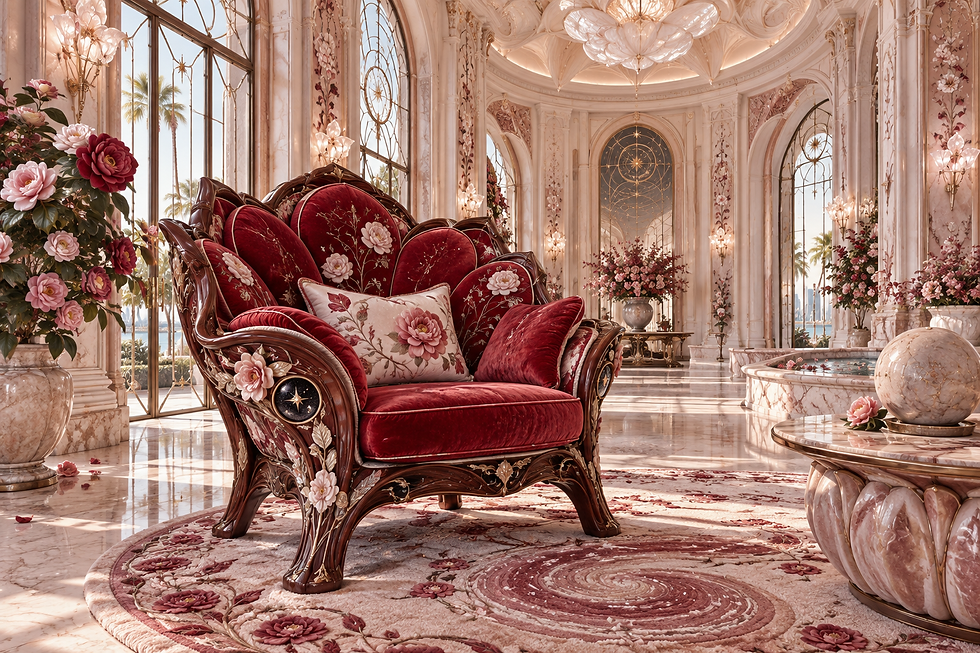
Craftsmanship study for The Camellia Conservatory: rose textiles, camellia-inspired carving and fresh embroidered upholstery. Original design concept.
Extend the botanical idea with restraint
In an adjoining bedroom, the flower can become a shallow upholstered headboard curve or a single embroidered panel. Keep the ceiling quieter if the room's primary purpose calls for less visual activity. Give each bedside position useful storage and independent lighting. A deep red accent may remain, but the proportion of ivory can increase. The relationship between rooms should be recognizable without requiring every space to repeat the conservatory's strongest gesture.
A dining interpretation can use petal-shaped chair backs around a restrained oval table. The backs should still support the user, and their width must allow the chairs to sit comfortably together. Test the occupied arrangement, including the space needed to move a chair and pass behind it. A single floral light or a milky-glass vessel can carry the botanical reference. Serving storage and the route to the kitchen deserve equal attention.
Art can introduce an individual story without competing with the giant ceiling form. A small botanical study, an abstract work in related tones, or a personal ceramic collection might occupy a quiet side wall. Select the display after the major proportions are established. Frames, shelves, and lighting should suit the actual objects, with enough flexibility for change. The room should be able to absorb the household's possessions rather than demanding an entirely imaginary collection.
At the garden transition, a sheltered bench and a limited planting arrangement can extend the room's sense of enclosure. Keep exterior upholstery and finishes appropriate to their actual exposure, with a clear maintenance plan. Plant containers need a stable position and protection for surrounding surfaces. The strongest connection may be a carefully framed view rather than a large number of plants inside. Horticultural and architectural decisions should be coordinated for the property.
The camellia as a flower from an imagined world
A fictional garden civilization cultivates one extraordinary red flower as a symbol of affection. Its unfurling petals become a sofa profile, a ceiling relief and the rhythm of embroidered borders. Galaxy-like spirals can thread through those botanical lines without turning the room into a literal space scene. Ruby and neighboring rose tones give the royal room depth, while newly finished carving and carefully matched stone establish its finer scale. The story offers an owner a vocabulary for a personal commission, with each floral gesture developed into comfortable furniture rather than fragile spectacle.
Astronomical reference: NGC 1087 — NASA. The invented cultures and planetary scenes described here are creative fiction.
God, beauty and a godly life
In The Camellia Conservatory, the word godly expresses an aspiration toward reverence, generosity and wonder. For an owner who wishes to honor God through the home, light, garden symbolism and carefully proportioned ornament can carry that personal meaning. The commission can reflect the household’s chosen faith through considered details and a welcoming atmosphere. A godly life in 51 means an aspiration toward love, vitality, rest, generosity and care for the home and the people welcomed into it.
Integrated technology and lasting craftsmanship
Use layered display and general lighting so the red textiles retain depth at different hours. Keep lighting channels reachable behind removable trim. Replacement fabric reserves and separately mounted decorative panels allow the room to be cared for as a lasting collection.

Interior and garden transition for The Camellia Conservatory: rose textiles, camellia-inspired carving and fresh embroidered upholstery. Original design concept.
Commission the room in a sensible order
Custom residential interior design services in Miami, Florida should define the existing conditions before the ceiling relief is treated as fixed. The initial scope may include measured planning, enclosure review, lighting coordination, furniture design, and material selection. Specialist input may be needed for the relief's support, fabrication, and installation. Ask which deliverables are included and how unresolved technical questions are recorded, so the concept can develop through a transparent sequence of decisions.
The fee for bespoke Collection 51 work is established by an individual proposal. Separate design services from construction, specialist fabrication, furnishings, and installation when discussing resources. The ceiling relief and petal sofa are the two major gestures, so decide whether both deserve equal emphasis in your residence. A simpler relief can leave more attention for seating comfort and window treatment. Editing should preserve the room's useful functions while clarifying its visual priorities.
Comparing residential interior design companies near me in Miami, FL should include questions about mock-ups and sample approval. An Interior designer in Miami should explain how a red fabric, lacquer finish, and milky glass will be coordinated across different suppliers. Ask who reviews shop drawings, checks site dimensions, and approves substitutions. These responsibilities influence the finished result and should be clear before the homeowner commits to the most specialized elements.
Questions about commissioning the Camellia Conservatory
How do I choose a designer for a bold botanical room?
When searching “hire best custom residential interior designer near me in Miami, FL,” ask how the ceiling relief would be scaled to your actual room. The phrase “hire best residential interior designer near me in Miami, FL” should lead to a discussion of both expression and use. Top interior designers in Miami can be compared through their ability to explain which elements carry the idea and how they would simplify the design if the room required it.
What should a company make clear before I proceed?
A Residential Interior Design Company near me in Miami, FL should describe its scope and the specialist coordination involved in a custom relief. If your search is “hire best residential interior design company near me in miami, fl,” ask for the proposed review stages and deliverables. The best residential interior design company near me in miami, fl is a judgment about suitability and process, supported by clear responsibilities rather than unsupported statements of superiority.
Can the room feel special with only one custom centerpiece?
Yes. A single petal sofa can establish the concept when the architecture remains quiet. Luxury interior designers Miami should be able to discuss that edited approach. A luxury residential interior designer near me in Miami, FL might place resources into upholstery, proportions, and lighting before adding a complex ceiling. High-end interior design services near me in Miami, FL should help identify the combination that fits your priorities, without assuming every surface needs custom decoration.
Can I include an adjoining dining room or bedroom?
When requesting residential interior design services near me in Miami, FL, identify the rooms that share views and circulation with the conservatory. Searches for residential interior design services near me in Miami, Florida can produce different levels of service. Ask for custom residential interior design services near me in Miami, Florida with a written scope that explains how the related spaces will be developed and which selections, drawings, and coordination tasks belong to each phase.
How should I assess an individual designer's approach?
A Residential Interior Designer near me in Miami, FL should discuss the practical consequences of strong color and sculptural furniture. The best residential interior designer near me in Miami, FL for this room will explain comfort, textile care, and daylight as clearly as form. When comparing top residential interior designers near me, ask how they would test a sofa prototype, a lacquer corner, and a lit relief sample before approving the full installation.
What information should I bring to a consultation?
For custom residential interior design near me in Miami, FL, bring plans, photographs of the room at different times, and examples of colors you enjoy living with. If you want to “hire best custom residential interior design company near me in Miami Florida,” describe the balance you want between a strong centerpiece and everyday ease. Asking for help “near me, in Miami, Florida” establishes location; your routines, maintenance preferences, and existing furnishings establish the real design problem.
Discuss the flower that belongs in your home
To explore this private concept, contact Custom Construction Company, call +1 786 909 3381, or email info@customconstructioncompany.com. Homeowners looking to “hire best custom residential interior design company near me in Miami Florida” can use the first discussion to compare the proposed process with their priorities. An individual proposal can then define the agreed residential scope and the samples, drawings, and specialist input needed to develop the Camellia Conservatory.
Continue your Collection 51 journey
Read the galaxies, planets and imagined-life companion in The Eternal Garden for the documented astronomy behind the collection’s fictional worlds.


Comments