
French Empire Residential Interior Design Near Me in Miami, FL


French Empire residential interior design concept with newly made furniture and fresh finishes.
Contents
A new Empire salon in Miami: who this room is for, and what it feels like
Historical grounding you can trust (and how Miami changes the brief)
Spatial composition: symmetry you can live with, circulation you can feel
A Miami Empire palette: navy, crimson, mahogany, bronze-gold—with daylight in mind
Mahogany in 2026: grain direction, joinery, and the difference between solid and veneer
Textiles that look tailored in Florida: silk, embroidery, and crisp upholstery
Chairs and sofas: Empire silhouettes with believable ergonomics
Lighting: bronze-gold restraint, layered control, and a convincing evening scene
Window treatments: Empire-inspired structure without blocking the view
Bedroom interpretation: a composed Empire retreat that still feels cool
Dining interpretation: symmetry, serving logic, and surfaces that handle real use
Craft details that make it convincing: carvings, mounts, edges, and alignment
Art, mirrors, and personal collections: how to display without breaking the axis
Adapting Empire to a Miami condo or house: what changes, what stays
Commissioning and budget priorities: where to spend for the strongest result
A new Empire salon in Miami: who this room is for, and what it feels like
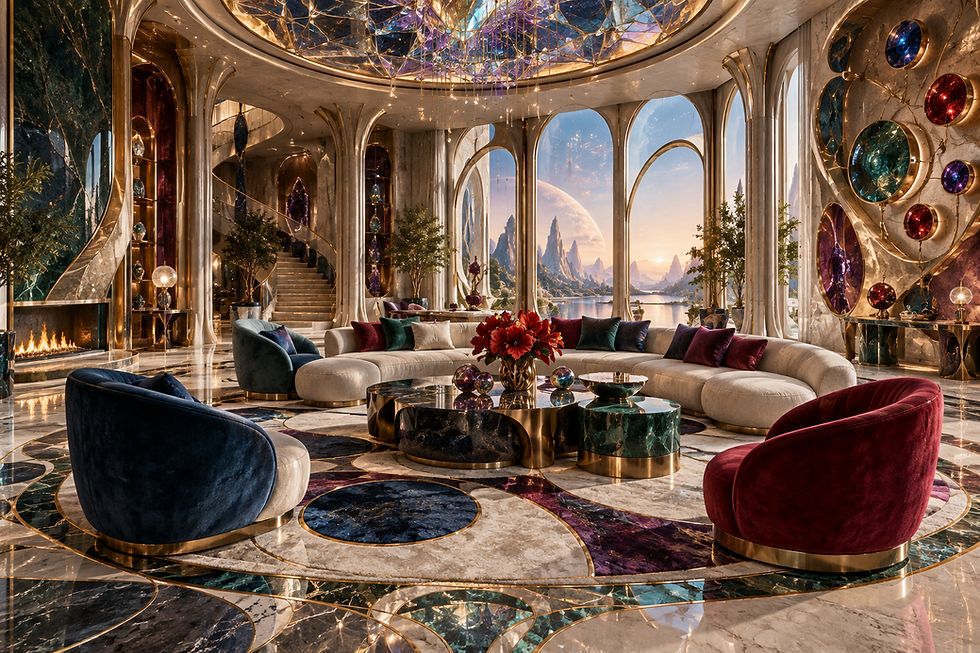
French Empire done as a newly built Miami salon is for the homeowner who wants formality without stiffness: a room with architectural symmetry, clear sightlines, and seats that feel composed the moment you enter. In bright Florida daylight, navy upholstery reads calm rather than heavy, while mahogany feels warm instead of dark—especially when bronze-gold accents are restrained and placed with intention. This room suits collectors, hosts, and anyone who prefers rooms that “hold their shape” even after a lively evening.
If you’re exploring this direction through a designer, start with the service expectations: the style asks for careful proportions, custom millwork alignments, and furniture drawings that anticipate circulation and comfort. Studio proposals and interior visualizations can be developed through Custom Construction Company’s residential interior design service, from room planning to furniture specifications and trade coordination. People who search “hire best custom residential interior design company near me in Miami Florida” are usually trying to compare process and craft depth; French Empire is a perfect test because it rewards discipline, not noise.
Empire works best when you commit to a few strong notes—navy, crimson, mahogany, and bronze-gold—and then let Miami’s reflective light do the rest. The goal is not to mimic a museum interior. It’s to commission crisp, newly manufactured furniture with classical structure, fresh fabrics with clean tailoring, and a layout that respects how you actually live.
Historical grounding you can trust (and how Miami changes the brief)
French Empire is an early nineteenth-century Napoleonic form of Neoclassicism, associated with furniture that takes on an architectural character and commonly uses mahogany with gilt-bronze mounts. The Metropolitan Museum of Art summarizes the period 1800–1815 and highlights the importance of classical references and crisp, structured forms. It also notes that Percier and Fontaine’s Recueil was published in 1812. See the Met’s overview for a concise baseline. Met essay: Empire Style, 1800–1815
For a 2026 Miami interpretation, treat that history as a proportional and compositional lesson, not a permission slip for imperial insignia. New commissions can echo architectural clarity—strong legs, well-defined rails, and deliberate ornament—without copying eagles, bees, or overt state symbols. Miami adds two decisive constraints: intense daylight (which will expose weak joinery, sloppy gilding, and uneven sheen) and a lifestyle that uses rooms more fluidly. The brief becomes: classical structure, modern comfort, and materials finished to look immaculate from morning sun through evening lamplight.
Spatial composition: symmetry you can live with, circulation you can feel
Empire reads instantly when the plan is composed like a façade: a centered axis, mirrored groupings, and a hierarchy of focal points. In a Miami living room, begin by picking the “front” of the room—often the longest wall, a fireplace wall, or the view wall. Then set a central element that can carry ornament without clutter: a console with a large mirror, a pair of tall lamps, or a framed artwork above a low credenza.
Circulation should be generous and obvious. Aim for clear paths that don’t require turning sideways between furniture. A practical approach is to float a main seating group on an area rug and keep a continuous perimeter walkway near windows and doors. Empire furniture can be visually weighty; spacing is what keeps it breathable. Two identical fauteuils (open-arm chairs) facing a sofa gives the symmetry without blocking movement, and it creates a natural conversation rectangle.
Proportion matters more than quantity. One well-sized sofa and two chairs will outperform three small, fussy seats. If you want additional capacity for entertaining, add a pair of x-stools or ottomans that slide under a console. They read architectural—like plinths—yet they don’t interrupt the room’s geometry.
A Miami Empire palette: navy, crimson, mahogany, bronze-gold—with daylight in mind
Navy is the anchor. In Miami sun it can shift toward ink, so decide early whether you want a blue with a slight green cast (calmer) or a blue with a violet cast (more dramatic at night). Put navy where you can tailor it: upholstery, drapery leading edges, or a paneled wall in a matte finish. Reserve crimson for controlled, countable accents—piping, a lumbar cushion, a lampshade lining, or a single artwork with red notes—so it reads intentional rather than themed.
Mahogany should be treated as a color field, not just a material. When it’s polished too high, it can reflect daylight harshly and highlight fingerprints. A refined satin polish often looks more expensive in Miami because it softens glare while still reading crisp. Bronze-gold is the punctuation: it should outline, hinge, and terminate forms—handles, ferrules, sabots, small mounts—rather than coat broad surfaces.
Balance is achieved by adding a quiet “fifth color” through neutrals. Warm ivory on ceiling and trim keeps the room buoyant, and a stone tone—pale gray-beige, or a green-black marble accent—can separate mahogany from navy without introducing a new statement hue.
Mahogany in 2026: grain direction, joinery, and the difference between solid and veneer
Commissioned Empire-style furniture lives or dies by grain discipline. Ask to see how the grain will run on rails, legs, and panels. Long horizontal rails look calmer when the grain runs lengthwise; door fronts and large panels often read best with bookmatched veneer for symmetry. A credenza can be designed with a central door pair that bookmatches, then flanking panels that mirror each other—an architectural rhythm that echoes the room plan.
Joinery should be selected for what will be seen and what will be stressed. Mortise-and-tenon connections at chair frames make sense where loads repeat; properly designed dowelled or other engineered joints may also be suitable; the maker should explain how each connection handles its intended load. For tables, pay attention to apron-to-leg connections and how the top is allowed to move seasonally; a well-made piece anticipates movement so the finish stays crisp.
Consider where you want bronze mounts to “solve” transitions. A sabot at the foot of a tapered leg protects the visual termination and can also protect the finish from routine cleaning. Similarly, a bronze collar can hide a joint line where a leg meets a rail. These details can be newly cast and sharply finished; they should look deliberate, not like an afterthought.

French Empire craftsmanship visualization: fresh textile, finish, and material details proposed for a custom interior.
Stone and high-performance alternatives: where dark marble works, and how to maintain it realistically
Empire loves dark stone, but Miami living should dictate placement. Dark marble is most convincing on smaller horizontal surfaces—console tops, a pier table, a side table insert—where the color reads rich without dominating the room. If you choose a green-black or charcoal stone with visible veining, keep surrounding finishes quieter: plain mahogany, minimal gilding, and a consistent metal tone.
Maintenance is specific to the selected product and finish. Many natural stones can etch with acids and can show rings if left wet; some stones are more forgiving than others, and honed finishes may display marks differently than polished ones. The practical approach is to decide how you intend to use each surface. A console that only holds a lamp and an art book can be natural marble; a cocktail table that hosts citrus and wine might be better as a high-performance porcelain slab or engineered surface that visually reads like stone.
Edge profiles matter in this style. A thin, sharp arris feels too modern; a softly eased edge or a small ogee can echo classical molding without becoming ornate. Specify the edge early so stone thickness and support structure are coordinated with the base design.
Textiles that look tailored in Florida: silk, embroidery, and crisp upholstery
Empire textiles should look freshly cut, not draped like a costume. The most convincing approach is to use silk selectively and rely on high-quality woven textiles where hands and sunlight are constant. A silk blend on accent chairs, a silk taffeta banding on drapery, or a silk lampshade exterior can deliver the sheen the style expects. For the sofa, consider a tightly woven textile in navy with a subtle rib, basketweave, or small-scale pattern that reads near-solid from across the room.
Embroidery is best used like jewelry. A single embroidered medallion on a lumbar cushion, a narrow border on a valance, or an inset panel on a headboard can introduce classical reference without turning the room into a theme. Keep the embroidery scale large enough to read from standing height, but not so large that it competes with the room’s architecture.
Tailoring details do the heavy lifting: knife-edge cushions for a crisp look, or a very modest crown if you want softness without slouch. Contrast piping in crimson can be striking, but only if the sofa silhouette is clean and the piping is perfectly even around curves. In Miami daylight, uneven welt cord telegraphs immediately.
Chairs and sofas: Empire silhouettes with believable ergonomics
A common mistake is choosing Empire-inspired seating that looks correct but sits like a prop. For a 2026 interior, build comfort into the frame while keeping the silhouette disciplined. On a sofa, a tighter back with a subtle rake (not fully vertical) supports conversation and reading. Seat depth should suit how you lounge; if you like to sit upright, keep depth moderate and add a firm lumbar option. If you relax with feet up, plan an ottoman that matches the architecture of the room rather than a casual pouf.
For chairs, a fauteuil form can be excellent in Miami because open arms keep it visually light. Prioritize arm height that allows the elbow to rest naturally; too high reads severe and becomes unusable. A gently curved crest rail and a slightly scooped seat can improve comfort without changing the look. If you include a klismos-like curve or saber-like legs as a reference, keep the curve crisp and intentional; the style depends on precise geometry.
Upholstery construction should be specified with the fabric in mind. Some fabrics look best with minimal tufting; others can handle a single row of buttoning on a back panel. Deep tufting can fight the style’s clean planes unless it’s drawn very shallow and perfectly aligned. Always request a mockup or at least detailed sections in the design drawings so comfort and appearance are aligned before fabrication.
Lighting: bronze-gold restraint, layered control, and a convincing evening scene
Daylight makes the room; lighting makes it livable after sundown. Empire lighting in Miami works best when it’s layered and controlled rather than bright and theatrical. Start with a central fixture that reads architectural—often a chandelier with a clear geometry. Keep the metal tone consistent with other bronze-gold details. Then add two symmetrical table lamps on the main console or credenza to reinforce the axis of the room.
Wall lighting is where you can add classic reference without clutter. A pair of sconces flanking art or a mirror can frame the focal wall. Choose shades that keep the light warm and directed. For reading, include a discreet floor lamp near a chair; select a profile that stays slender and doesn’t compete with furniture legs and mounts.
Controls matter. Separate circuits for chandelier, sconces, and lamps allow you to compose the evening like a stage set—soft perimeter glow with concentrated pools of light on seating and art. In a high-rise condo where you may see your room reflected at night in glass, layered lighting prevents the “aquarium effect” and keeps the interior feeling deep.
Window treatments: Empire-inspired structure without blocking the view
In Miami, windows are often the room’s main asset. The trick is to add Empire structure without heavy drapery swallowing glass. Consider a tailored approach: ceiling-mounted tracks that keep panels clean and vertical, with generous stack-back so the view is fully open when curtains are pulled. A narrow banding detail—navy with a crimson edge, or ivory with a bronze-gold trim—can provide the classical cue.
If you add a valance, keep it architectural: a straight or gently stepped profile rather than a deep swag. The valance should frame the top of the opening and hide hardware, not lower the perceived ceiling height. Curtain hems should finish precisely relative to the floor level—either kissing the floor or hovering slightly above for a crisp look—so they are easier to operate and keep clear of floor dust.
For privacy and sun control, layer with a quiet inner shade. A light-filtering shade in a warm white can soften glare while letting the room stay bright, and privacy depends on the fabric, lighting, and sightlines, so review a sample from outside as well as inside.

French Empire furniture design concept: new upholstery and a distinctive sculptural form developed for this visual study.
Bedroom interpretation: a composed Empire retreat that still feels cool
An Empire bedroom should feel like a private suite, not a theatrical set. Begin with the bed as the primary architectural object. A newly fabricated headboard with mahogany posts and a navy upholstered center panel can reference classical structure while staying clean. Consider a subtle bronze-gold reveal or a small carved bead detail along the frame, but keep the face planar so bedding remains the softer layer.
Nightstands should be sized to the bed and lamps, not chosen as mini dressers by default. A pair of compact mahogany stands with bronze pulls can keep the room symmetrical and provide disciplined storage. If space allows, a low bench at the foot of the bed in navy upholstery can add function without interrupting circulation. Leave a clear path to the closet and bath; an Empire room feels better when walking lines are straight and unobstructed.
Color in the bedroom can be quieter than the salon. Use navy in upholstery and perhaps a wall panel; use ivory walls and ceiling to keep the room airy; introduce crimson only through small textiles—an embroidered sham edge or a narrow ribbon detail. For Miami comfort, choose bedding fabrics that feel fresh against skin; the Empire cue can come from trim, proportion, and tailoring rather than heavy cloth.
Dining interpretation: symmetry, serving logic, and surfaces that handle real use
Empire dining thrives on clear geometry: a centered table, consistent chair spacing, and a strong perimeter of storage. A rectangular table is often easiest for modern entertaining; it also aligns with architectural axes. If you prefer round, commit to a generous diameter so place settings don’t feel tight. In either case, leg design should respect knees. A pedestal can be comfortable, but ensure the base footprint doesn’t collide with chair legs.
Chairs can echo the living room but should be optimized for dining posture: a supportive back, a seat that doesn’t slope excessively, and upholstery that suits how you host. Navy seat upholstery with a subtle pattern can hide minor inevitable marks better than pure solid, but performance depends on the exact textile. For the host chair positions, consider slightly more sculptural arms to punctuate the ends without crowding circulation.
A sideboard is where Empire really pays off. Design it like a small piece of architecture: centered doors, flanking compartments, and bronze hardware aligned in a precise grid. Top it with a stone or stone-look surface depending on how you serve—hot platters, wine, and citrus call for realistic maintenance planning. Add two tall lamps or a pair of candlesticks for evening, and let art above it complete the axis.
Craft details that make it convincing: carvings, mounts, edges, and alignment
French Empire is unforgiving of “almost.” The room reads correct when details align across trades: millwork reveals matching furniture reveals, hardware aligned with panel proportions, and bronze tones consistent across lighting and mounts. A useful discipline is to choose a small set of repeatable motifs—bead-and-reel edges, laurel-like geometry abstracted into a simple embroidered curve, or a restrained rosette—then repeat them sparingly across the room.
Carving should be shallow and crisp, not deep and romantic. On a chair crest rail, a low relief pattern can read refined; on a console apron, a single centered cartouche shape without imperial symbols can feel classical while staying personal. Mounts should be sized to the furniture. Oversized mounts make a piece look costume-like; undersized mounts look timid. Good design drawings call out mount locations with dimensions so the metalwork is not guessed at installation.
Alignment is a hidden luxury. If you have paneled walls, align panel stiles with the centerlines of key furniture—sofa center, console center, chandelier center. When those lines line up, the room feels calm, and you can keep ornament minimal.
Art, mirrors, and personal collections: how to display without breaking the axis
Empire rooms love a focal mirror, but the mirror should be chosen like architecture. A tall rectangular mirror with a modest bronze or gilt surround can reinforce verticality and bounce Miami daylight deeper into the plan. Avoid overly ornate scrollwork that fights the furniture’s clean geometry. If you want a more contemporary edge, keep the mirror profile simple and let the placement do the Empire work: centered over a console with matching lamps, exactly aligned.
For art, scale is essential. One large piece above the sofa or credenza often reads more Empire than a salon wall of many small frames—unless the small frames are perfectly gridded and consistently matted. Choose frames that harmonize with bronze-gold and mahogany; black frames can work if repeated and if the room has enough warmth elsewhere.
Collections—porcelain, sculpture, books—should be edited and grouped symmetrically where possible. Use pairs: two urn-like objects, two identical book stacks, two sculptural pieces. When asymmetry is desired, contain it within a symmetrical envelope, such as a single sculptural object centered on a table but with asymmetrical book placement beneath. Display lighting should be subtle; a discreet picture light or a tiny LED strip in a cabinet can highlight objects without turning the room into a showroom.
Adapting Empire to a Miami condo or house: what changes, what stays
In a condo, the constraints are often window walls, limited wall space for symmetry, and reflections at night. The strategy is to create an internal axis that doesn’t rely on full-height solid walls. A floating console behind a sofa can become the “backbone” of the room, giving you a place for lamps and a centered mirror facing inward. You can also use a pair of tall bookcases or display towers to simulate architectural symmetry without building new walls.
In a house, you may have more opportunities for millwork, deeper entries, and longer sightlines. Consider an antechamber-like transition—an entry console aligned to a living room focal wall—so the Empire order begins as you arrive. In open plans, define zones with aligned rugs and matched ceiling lighting positions rather than scattering furniture. Empire can look chaotic if every zone has its own focal center; the style prefers one dominant axis with secondary axes branching off.
Either way, don’t treat symmetry as a prison. The goal is composed balance: equal visual weight, deliberate spacing, and a clear hierarchy. Final dimensions, materials, and details should be developed for your actual residence—window sizes, ceiling heights, and existing finishes will all influence what is appropriate and buildable.

French Empire interior visualization: a second residential composition with newly made furnishings and fresh textiles.
Commissioning and budget priorities: where to spend for the strongest result
If you’re commissioning a French Empire interior, budget priorities should follow what your eye notices first—and what Miami light will reveal. Spend on the primary upholstered pieces (sofa and main chairs) because comfort and tailoring are non-negotiable. Next, spend on the key mahogany casework and tables where grain matching, joinery, and finish quality will be apparent daily. Bronze mounts and hardware are often a smaller surface area but a high-impact detail; prioritize fewer, better-finished metal pieces rather than many mediocre ones.
Millwork can be transformative, but only if it’s aligned to the room’s plan and the furniture. A simple paneled wall executed precisely will look more convincing than complex profiles that don’t line up with anything. For stone, decide where true natural marble will be appreciated and where a high-performance alternative is smarter for your use. Allocate time in the design phase for samples—wood finish chips, metal finish samples, and fabric memos—viewed in your Miami daylight and evening lighting.
For homeowners comparing “Top interior designers in Miami” or evaluating a “Residential Interior Design Company near me in Miami, FL,” ask how the designer documents decisions: furniture drawings, reflected ceiling plans, finish schedules, and procurement coordination. French Empire punishes vague specifications; it rewards clear documentation and thoughtful tradeoffs.
Planning your French Empire service in Miami
Choosing a designer for French Empire starts with evidence of fit. Ask how the team will test the room layout, tailor seating to your household, and carry the approved visual direction into drawings and samples. Compare those answers when your search includes “hire best residential interior designer near me in Miami, FL”, “best residential interior designer near me in Miami, FL” and “top residential interior designers near me”. A persuasive proposal should explain the decisions you will approve and who coordinates each specialist.
There is room for French Empire within a personal Miami interior design style. The relevant question is how it will respond to your windows, existing architecture, and collections. If your search includes “Miami interior design style”, discuss those conditions before selecting finishes. A compelling photograph is useful inspiration; a residence also needs coherent decisions about everyday use.
When comparing “residential interior design companies near me in Miami, FL”, ask each firm to identify the scope it is actually pricing. For French Empire, a furniture refresh and a room with custom architectural detailing involve different drawings, approvals, and installation responsibilities. Include site measurement, sample review, procurement, and installation coordination as separate line items, then confirm which are included in the engagement.
For a French Empire commission, translate “luxury residential interior designer near me in Miami, FL” and “high-end interior design services near me in Miami, FL” into practical expectations: a considered furniture plan, coordinated finishes, and sample approvals before purchasing. Discuss how visible craftsmanship will be balanced with maintenance and comfort. The most elaborate option is worthwhile only when its proportions and use have been resolved for the room.
If you are comparing “residential interior design services in Miami, Florida”, “residential interior design services near me in Miami, Florida” and “custom residential interior design services near me in Miami, Florida”, bring an annotated floor plan and a short list of priorities to the consultation. Explain what attracts you to French Empire, which rooms should change, and which possessions should remain. Ask for a written sequence of concept review, design development, product selection, and installation decisions, with responsibility for each stage made clear.
If you are comparing “custom residential interior design services in Miami, Florida”, bring an annotated floor plan and a short list of priorities to the consultation. Explain what attracts you to French Empire, which rooms should change, and which possessions should remain. Ask for a written sequence of concept review, design development, product selection, and installation decisions, with responsibility for each stage made clear.
For homeowners looking for “near me, in Miami, Florida”, the service location for this French Empire guide is Miami, Florida. Share your actual property location and access conditions when inquiring. The images are interior design concepts; your room dimensions, building conditions, and selected products will guide the final design and scope.
Hiring FAQs for Miami homeowners considering French Empire
How do I hire best custom residential interior designer near me in Miami, FL for a French Empire home?
Interview for precision. Ask to see how the designer communicates symmetry, alignment, and custom furniture detailing—look for clear plans, elevations, and finish schedules rather than mood-only presentations. French Empire requires decisions about grain direction, metal finish consistency, and textile tailoring; a strong “Interior designer in Miami” will explain these tradeoffs in relation to your daylight, views, and daily habits, then document them for contractors and vendors.
What should I expect from residential interior design services near me in Miami, FL for this style?
Expect a process that moves from spatial planning to detailed specifications: furniture layouts that protect circulation, lighting layers for evening scenes, and a coordinated palette that stays stable in strong sun. Because Empire relies on architectural order, design services should include elevations for focal walls and millwork alignment, plus procurement support for newly manufactured furniture, custom upholstery, and hardware that matches across the room.
When people search Luxury interior designers Miami, what should they evaluate besides “luxury”?
Evaluate discipline and construction fluency. In French Empire, the “high-end” result comes from proportion, crisp workmanship, and coherent detailing—not from adding more ornament. Ask how the designer coordinates upholstery workrooms, millwork shops, and installers, and how they review samples in Miami light. Also ask how they handle revisions when a finish looks different at home than it did in a showroom.
Can custom residential interior design near me in Miami, FL include newly manufactured Empire-style furniture without pretending it’s antique?
Yes, and it should be explicit. Newly manufactured pieces can reinterpret Empire structure—architectural legs, clean rails, bronze mounts—without claiming historical provenance. A responsible designer will describe the references, then produce drawings and specifications for new fabrication and fresh fabric selection. The goal is crisp new craftsmanship, not patina or imitation “age.”
Defining the custom commission
If your starting point is “hire best custom residential interior design company near me in Miami Florida”, make the French Empire brief specific: identify the focal room, the signature furniture piece, and the daily activities it must support. Ask for an explanation of how new fabrication, finish sampling, and comfort testing will be handled before you commit to custom orders.
Discuss your French Empire home with Studio
Your search to “hire best custom residential interior design company near me in Miami Florida” can become a focused conversation about your French Empire project. Explore Custom Construction Company’s residential interior design service, then contact Studio with your plans and priorities. Call (786) 909-3381 or email info@customconstructioncompany.com to ask about scope and availability in Miami, Florida.
Explore related design styles: French Neoclassical, Belle Epoque, and Contemporary Georgian. Browse the Interior Design Styles library to compare historical influences, furniture, materials, and original residential design concepts.


Comments