
Soft Brutalism Residential Interior Design Near Me in Miami, FL

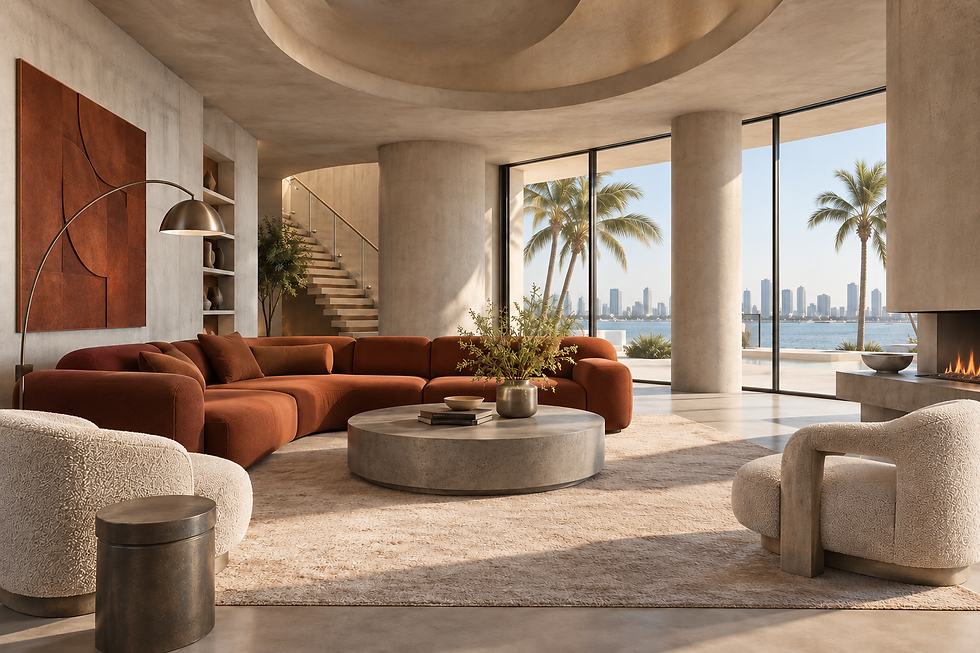
Soft Brutalism residential interior design concept with newly made furniture and fresh finishes.
Contents
Soft Brutalism in Miami: monumental calm that still feels like home
A short, accurate lineage: Brutalism vs. today’s “Soft Brutalism”
Planning the room as architecture: massing, axes, and comfortable circulation
A 2026 palette for Miami daylight: warm concrete, cream, rust, charcoal
Concrete and plaster without the pitfalls: surfaces, seams, and maintenance
Oak, grain direction, and joinery that reads “newly made,” not rustic
Textiles that soften the mass: mohair, bouclé, wool, and embroidery accents
Seating that feels sculptural but truly comfortable: proportion and ergonomics
Lighting a Soft Brutalism interior: daylight control and evening atmosphere
Bedroom interpretation: a carved headboard wall, quiet storage, and tactile calm
Dining interpretation: weight, legroom, and a single decisive centerpiece
Craft details that make the concept feel intentional: reveals, radii, and hardware
Art and personal collections: how to curate without breaking the calm
Adapting Soft Brutalism to a Miami condo or house: practical constraints and smart substitutions
Commissioning and budget priorities: where to invest for the strongest result
Soft Brutalism in Miami: monumental calm that still feels like home
Soft Brutalism suits a Miami homeowner who wants architecture to do more than “frame” furniture. In this approach, the room itself becomes a series of thickened planes, sculpted apertures, and weighty built-ins—yet the lived experience stays gentle through plush upholstery, warm woods, and light-catching plaster. It’s ideal for collectors who prefer fewer, better pieces; for families who want durable clarity without visual noise; and for condo owners craving grounded warmth against glassy views.
For Studio concepts and detailed scope planning, Custom Construction Company offers residential interior design tailored to Miami, Florida—where glare, humidity, and high-rise proportions shape every material decision. Early on, clients often arrive with a search like “hire best custom residential interior design company near me in Miami Florida.” Treat “best” as your criteria: a team that can coordinate finish mockups, custom millwork, and furniture specifications so the architecture and textiles read as one composed interior, not separate shopping lists.
Soft Brutalism is also a practical antidote to rooms that feel over-furnished. Instead of adding more décor, you reshape the envelope: a thicker portal to the living area, a bench that becomes storage, a fireplace wall that becomes a quiet gallery. The result is less clutter, more intention, and a daily sense that the room has a calm structure—especially valuable in Miami daylight, where strong contrast can make conventional “soft neutrals” look washed out.
A short, accurate lineage: Brutalism vs. today’s “Soft Brutalism”
Historical Brutalism emerged in the postwar 1950s and emphasized visible material and structural expression, often concrete or brick but also other materials. “Soft Brutalism” is a current domestic adaptation combining mass and restrained geometry with inviting textiles. It is not the name of the original movement, and a concrete appearance need not mean massive structural concrete construction. (Brutalist architecture—overview)
In a Miami residence, that distinction matters. You can achieve the visual weight through non-structural plaster builds, high-performance panels, or concrete-look finishes, while still meeting the realities of condo rules, elevator access, and moisture management. The goal is not to imitate institutional buildings; it’s to borrow the legibility of mass and simplify the room’s hierarchy—then soften the touchpoints so the space feels domestic.
Planning the room as architecture: massing, axes, and comfortable circulation
Start by choosing one “monument” element that the room will orbit: a sculptural hearth wall, an oversized portal that frames a view, or a thickened media/collection wall that reads like a single carved volume. In Soft Brutalism, this element should be simple in outline and richly resolved in surface—fine plaster, smooth concrete, or a mineral paint with a quiet sheen. Keep the edges crisp and the proportions generous; the softness comes later, through textiles.
Circulation should be plotted before furniture. In Miami condos, a living room often doubles as a corridor between kitchen and balcony; plan a clear 36–48 inch path (or whatever the residence truly allows) that doesn’t pinch at chair corners. Instead of multiple small rugs, use one large field that “holds” the seating group. Let the walkway run outside that field so foot traffic doesn’t visually chop the composition.
A reliable Soft Brutalism layout is a wide, low sofa facing the monument wall, with two substantial chairs offset rather than symmetrical. The offset keeps the room from feeling like a lobby. Anchor the arrangement with a coffee table that reads as a solid object—stone, concrete-look composite, or heavy oak—then soften the perimeter: a mohair ottoman, wool drapery, and a deep pile rug with a tight edge finish.
Finally, manage thresholds. If the space connects to a dining area, use a thickened “beam” detail—often a soffit or plaster band—to mark the shift without adding doors. In a house, an entry sightline can be refined with a shallow bench volume and a tall plane behind it, so arriving guests immediately understand where to pause, where to walk, and what the room considers important.
A 2026 palette for Miami daylight: warm concrete, cream, rust, charcoal
Miami light is both generous and ruthless: it amplifies undertones, exaggerates contrast, and reveals texture from a distance. Soft Brutalism works best when you commit to a narrow palette with intentional temperature shifts. Think warm concrete and cream as the envelope, rust as the emotional center (often the sofa), and charcoal as the outline that keeps the room from drifting into beachy monotone.
Rather than pure white walls, specify a cream with a slight mineral cast—enough warmth to flatter oak and skin tones at night, but not so yellow that it fights green outdoor reflections. Warm concrete tones should read as sanded limestone rather than cold gray; test large samples at different times of day, especially near glazing where reflections can push surfaces cooler.
Rust can be handled as a single decisive volume: a newly upholstered sofa in rust mohair or a rust wool bouclé with a tight weave. Keep surrounding textiles quiet—cream, oatmeal, and smoke—so the rust reads intentional, not trendy. Charcoal is best used as a line: a shadow-gap reveal, a thin metal frame, a darkened oak edge, or a minimal sconce. Overuse turns the room graphic; underuse makes it feel unfinished.

Soft Brutalism craftsmanship visualization: fresh textile, finish, and material details proposed for a custom interior.
Concrete and plaster without the pitfalls: surfaces, seams, and maintenance
“Concrete” in a Soft Brutalism interior is often a finish language, not a structural demand. In a Miami condo, you might achieve the look with a microcement system over stable substrates, or with large-format porcelain slabs that read as honed concrete. Each choice has tradeoffs: microcement can offer seamless continuity but demands meticulous substrate prep; porcelain can be more predictable yet introduces grout lines that must be placed like intentional joints.
If you want a truly sculptural wall—curved returns, thickened niches, a bench that reads monolithic—fine plaster over a framed build is frequently the most flexible. Detail it like architecture: plan corners, control joints, and terminations at ceilings and floors. Soft Brutalism looks strongest when the seams are either nearly invisible or deliberately composed, never accidental.
Maintenance is more about the specific product than the category. A sealed microcement coffee table can be practical, but it may still show etching if spills linger. A honed stone top can feel sublime, yet it requires a sealing plan and household habits. For families who want the stone look with simpler daily care, a sintered surface or high-quality porcelain may be a good alternative—provided the edge profiles and corners are designed to feel substantial, not thin.
In wet or humid conditions, specify assemblies that respect movement. Plaster returns at window walls should allow for differential expansion; built-in planters, if desired, should be fully waterproofed and ventilated. The Soft Brutalism promise is calm—so the construction must be calm, too: stable substrates, careful sequencing, and mockups that prove the finish before it’s installed across a large field.
Oak, grain direction, and joinery that reads “newly made,” not rustic
Oak is the warmth engine in Soft Brutalism, but it should be handled with discipline. Choose a consistent cut—rift or quartered if you want quieter striping; plain-sawn if you want more cathedral grain—then commit to a grain direction strategy across the room. Vertical grain on tall cabinetry makes the architecture feel taller; horizontal grain on a long credenza emphasizes calm and length. Mixing directions can work if the transitions occur at deliberate “breaks” in the massing.
Edges and joinery matter because the style is simple enough to reveal every compromise. A thick oak surround at a niche should have mitered corners that align grain, or purposeful butt joints that express the construction honestly. Door and drawer fronts should be planned with even reveals and hardware that feels like a considered punctuation—often a slim pull in charcoal metal, or integrated finger pulls that keep the planes continuous.
Keep the finish fresh and modern: a matte clear coat that preserves natural tone, or a lightly fumed stain to deepen warmth without turning orange. In Miami light, overly glossy finishes can look busy, reflecting palm shadows and window mullions. A calm matte finish, paired with crisp machining, reads newly crafted—especially when paired with plaster or concrete-look surfaces that are equally controlled.
When the room includes built-in seating, cap it in oak with a generous radius at the front edge for comfort. Let the oak read as a tactile boundary between hard mineral surfaces and soft textiles. It’s also a practical place to hide performance details—removable upholstered cushions, concealed outlets in a shadow-gap, or a lift-up panel for storage—without cluttering the architecture.
Textiles that soften the mass: mohair, bouclé, wool, and embroidery accents
Soft Brutalism depends on textiles doing real work. A concrete-look wall without deep, touchable upholstery can feel chilly; a plush sofa without architectural mass can feel merely trendy. The 2026 interpretation favors newly manufactured upholstery in mohair, tight bouclé, and dense wool—with careful attention to nap direction, seam placement, and cushion architecture so the pieces look tailored, not overstuffed.
Mohair is especially effective in Miami because it catches light differently across the day, giving the rust sofa a subtle movement without a pattern. Specify cushion seams that hold geometry: a boxed seat with a refined welt can look crisp; a knife-edge back can look architectural. For bouclé, look for a loop that feels structured rather than shaggy, and consider a cream tone with a small percentage of darker fibers so it doesn’t read flat.
Embroidery should be used sparingly—one or two pillows, or a single panel on a bedroom headboard—so it reads like craft, not theme. A charcoal-on-cream stitched grid can echo concrete formwork lines without imitating them. For drapery, choose a wool-blend or textured linen in cream with a proper lining; set hems to meet the finished floor cleanly, and plan stack-back so panels don’t block glass when open.
Rugs should be substantial and quiet. A hand-tufted wool in cream with a low, dense pile can absorb sound and make the room feel settled. If you prefer a more graphic rug, keep the pattern large-scale and tonal—charcoal lines on warm cream—so it supports the architecture rather than becoming the focal point.
Seating that feels sculptural but truly comfortable: proportion and ergonomics
In a Soft Brutalism living room, the sofa often reads like a single volume—a rust block set against mineral planes. Comfort comes from the internal build: seat depth, back angle, and cushion composition. For most households, a seat depth around the mid-20-inch range works for upright conversation; deeper seats can lounge well but may need additional back cushions. The right answer depends on how you actually sit, and on the room’s circulation.
Aim for a low overall height so the sofa doesn’t fight Miami views. Pair it with chairs that are slightly taller, creating a gentle skyline: one chair with an enveloping back for reading, one with a more open silhouette to keep sightlines through the room. Avoid spindly legs; choose bases that feel grounded—plinths, continuous sled bases, or thick legs in oak or charcoal metal.
Coffee tables should be knee-friendly. If the table is stone or concrete-look, soften corners with a radius, bevel, or bullnose so the object feels intentional and safe in daily use. Consider a two-piece nesting set: one heavier “anchor” table and one lighter side table that can slide toward a seat. That flexibility matters in Miami entertaining, where gatherings often move between living room and terrace.
Finally, don’t forget the body’s contact points. Add one mohair ottoman with a firm top for trays, and one softer pouf that can act as an extra seat. This mix keeps the room from feeling like a showroom while still honoring the style’s disciplined geometry.
Lighting a Soft Brutalism interior: daylight control and evening atmosphere
Daylight is part of the design in Miami, but it must be shaped. Start with layered window treatments: a sheer that diffuses glare and protects textures from harsh direct sun, paired with a heavier drape for privacy and nighttime insulation. In Soft Brutalism, the hardware should be minimal—recessed tracks or slim rods—so the architecture remains the star.
For artificial lighting, build a three-tier plan. First, ambient: concealed cove lighting washing a plaster ceiling can make the room feel larger without visible fixtures. Second, task: a reading lamp at the chair, or a discreet downlight aligned with a console. Third, accent: a wall grazer that reveals plaster texture, or a narrow-beam spotlight that treats a sculpture like a quiet centerpiece.
Evening scenes should be warm and controlled, not uniformly bright. Use multiple dimmable circuits so the rust sofa can glow against cream walls while the concrete-look surfaces hold shadow. Charcoal accents—sconces, trim lines, or a darkened oak edge—become more legible at night, giving the room a calm outline.
Avoid overly decorative fixtures that introduce busy silhouettes. Instead, choose forms that feel like tools: a slender linear pendant over a console, a cylinder sconce beside a built-in bench, or a broad, low pendant in the dining zone that reads as a simple disc. The softness comes from the light quality and textile absorption, not ornament.
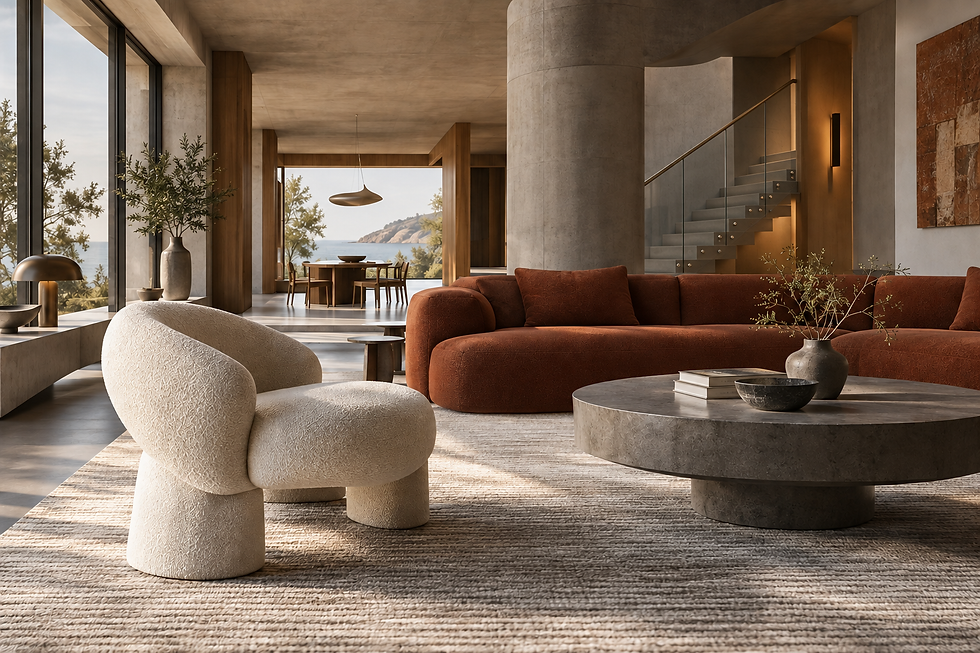
Soft Brutalism furniture design concept: new upholstery and a distinctive sculptural form developed for this visual study.
Bedroom interpretation: a carved headboard wall, quiet storage, and tactile calm
In the bedroom, Soft Brutalism becomes more intimate. A strong move is a headboard wall that reads as a thickened plane: plastered returns that create a shallow niche for the bed, with integrated reading lights and a concealed curtain pocket. Keep the geometry simple—rectangular recesses, a floating oak shelf—then soften the touchpoints with a padded headboard panel in cream bouclé or a tightly woven wool.
Nightstands can be integrated as monolithic blocks—oak boxes with push-latch drawers, or plaster volumes capped in stone. Plan the heights to suit your mattress and how you actually reach for a glass of water. If you prefer freestanding furniture, choose pieces with weight: a low oak cabinet with clean reveals, or a stone-topped table with a thick edge and a soft corner radius.
Closet and dresser fronts should continue the grain strategy from the main living areas. In Miami, consider how reflective mirrors and glossy lacquer can multiply daylight; if you want calm, keep sheen low and use mirrors only where they serve function. Add one crafted textile moment: an embroidered lumbar pillow, a blanket with a subtle charcoal whipstitch, or a rug that echoes the living room palette in a quieter register.
Lighting should flatter skin tones and reduce contrast. A dimmable cove behind the headboard plane can replace harsh overhead light, while bedside sconces provide focused reading. If the bedroom has a balcony, treat the threshold like a gallery: a simple plaster return, clean baseboards, and drapery that meets the finished floor precisely, so the room feels composed even when the doors are open.
Dining interpretation: weight, legroom, and a single decisive centerpiece
A Soft Brutalism dining area works best when the table is the monument. Consider a thick slab-like top—stone, sintered surface, or oak with a substantial edge—supported by two sculptural bases that allow generous legroom at corners. Round tables can be excellent in condos where circulation is tight, but keep the profile bold: a pedestal that reads as a single carved drum rather than a delicate stem.
Chairs should balance softness and structure. Upholstered dining chairs in cream wool or mohair can be comfortable for long meals, but they must have a disciplined silhouette—tight upholstery, clean seams, and a back angle that supports posture. If you prefer mixed materials, combine an oak frame with an upholstered seat and back panel, keeping the wood tone aligned with nearby cabinetry.
Lighting over the table should be one clear gesture. A wide disc pendant in a matte finish can pool light onto the tabletop, emphasizing texture and food without glare. Keep the hanging height calibrated to sightlines across the table. In open-plan layouts, anchor the dining zone with a rug that has a defined edge; choose a low pile for chair movement, in cream with a subtle charcoal pattern or border.
Storage should be quiet. A built-in sideboard can read like a continuous plaster volume with oak doors, hiding service pieces and barware. If you display ceramics, place them in a niche with a single integrated light strip, so the collection reads curated rather than cluttered.
Craft details that make the concept feel intentional: reveals, radii, and hardware
Soft Brutalism lives or dies on the small decisions. Shadow-gap reveals—where a wall plane “floats” above a base, or a cabinet front sits back from its frame—create depth without ornament. Keep reveal sizes consistent across the room so the eye learns the language. When you use radiused corners, repeat the radius in more than one place: a coffee table corner, a niche return, a bench edge. Repetition turns a detail into a motif.
Hardware should be treated like punctuation. If you choose pulls, select one family and use it consistently: slim charcoal bars, recessed finger pulls, or minimal knobs with a flat face. If you omit visible hardware, ensure the touch-latch or integrated pull is comfortable and durable in daily use. The point is not invisibility for its own sake; it’s maintaining the integrity of the planes.
Transitions between materials deserve mockups. Where plaster meets oak, plan a crisp termination—either a tight butt joint with a micro reveal, or a thin metal reglet that protects edges. Where a concrete-look surface meets painted drywall, align the break with an architectural line, not the middle of a wall. These decisions prevent the room from feeling like a set of unrelated finishes.
Finally, acoustics are part of comfort. In a high-rise with hard floors and glass, add absorption through rugs, drapery, and upholstered panels. A Soft Brutalism interior should sound calm—voices contained, footsteps softened—so the monumental forms feel welcoming, not echoing.
Art and personal collections: how to curate without breaking the calm
Soft Brutalism is an excellent backdrop for art because it reduces visual competition. Start by choosing where art is allowed to “shout” and where it must whisper. A single large canvas on a cream plaster wall can be stronger than a grid of small frames. If you have multiple works, consider a dedicated gallery plane—one long wall with consistent sightline height and controlled lighting—so the rest of the room stays quiet.
Sculpture and objects benefit from niches and plinths. A plaster niche with a charcoal shadow reveal can frame a ceramic piece, while a thick oak shelf can hold books and smaller objects without turning into clutter. Keep spacing generous; negative space is part of the composition. If you collect colorful work, let the room’s palette stay restrained so the art provides the chroma.
For family photographs and personal artifacts, consider a more private placement—bedroom, hallway, or a small study nook—so the main living room retains its architectural clarity. Alternatively, print photos in a consistent format and frame style, creating a composed series that feels intentional rather than incidental. The style is not anti-personal; it simply asks for editing and placement.
Lighting is what makes art feel collected rather than stored. Use adjustable accent lights sparingly, aiming for even illumination without hot spots. In Miami, be mindful of daylight exposure; place light-sensitive pieces away from direct sun paths, and use sheers to diffuse glare without turning the room dim.

Soft Brutalism interior visualization: a second residential composition with newly made furnishings and fresh textiles.
Adapting Soft Brutalism to a Miami condo or house: practical constraints and smart substitutions
In a condo, weight, access, and building rules can shape the finish package. Rather than assuming massive concrete construction, design the appearance: plaster builds, panel systems, or porcelain slabs that deliver the same visual mass with manageable logistics. Plan elevator dimensions, hallway turns, and staging areas early, especially for oversized sofas and large tabletop slabs. Final dimensions, materials, and details should be developed for the actual residence, not a generic plan.
Noise and neighbors also influence choices. Floating floors, underlayments, and acoustic strategies may be important, but the approach must match what your building allows. Soft Brutalism helps because it naturally favors rugs, drapery, and upholstered volumes that absorb sound. In a house, you gain freedom for deeper portals and more dramatic ceiling work, but you also inherit more sun exposure and potential humidity variation across rooms.
Mechanical and electrical locations are another driver. A sculptural wall is easiest when outlets, data, and lighting are planned before finishes begin. If you want a monolithic media wall, decide whether the TV is displayed, recessed, or hidden behind panels; each option changes viewing height, ventilation needs, and seam layout. The goal is that technology doesn’t disrupt the planes.
Furniture scale should respond to the shell. High-rise living rooms can dwarf standard pieces; choose a sofa length and rug size that look confident in wide glazing bays. In smaller homes, keep the monument element but reduce thickness—less depth in a bench, fewer layered planes—so the room stays breathable.
Planning your Soft Brutalism service in Miami
Choosing a designer for Soft Brutalism starts with evidence of fit. Ask how the team will test the room layout, tailor seating to your household, and carry the approved visual direction into drawings and samples. Compare those answers when your search includes “hire best custom residential interior designer near me in Miami, FL”, “hire best residential interior designer near me in Miami, FL” and “best residential interior designer near me in Miami, FL”. A persuasive proposal should explain the decisions you will approve and who coordinates each specialist.
Use a full-size furniture layout to compare proposals when searching for “top residential interior designers near me”. Confirm that the arrangement supports conversation, reading, and easy movement before approving upholstery.
There is room for Soft Brutalism within a personal Miami interior design style. The relevant question is how it will respond to your windows, existing architecture, and collections. If your search includes “Top interior designers in Miami”, “Interior designer in Miami” and “Luxury interior designers Miami”, discuss those conditions before selecting finishes. A compelling photograph is useful inspiration; a residence also needs coherent decisions about everyday use.
To make the result personal, use “Miami interior design style” as a starting point for a room brief. Bring a favorite artwork, material sample, or color reference, and explain how you want the room to feel in daily use.
When comparing “residential interior design companies near me in Miami, FL” and “Residential Interior Design Company near me in Miami, FL”, ask each firm to identify the scope it is actually pricing. For Soft Brutalism, a furniture refresh and a room with custom architectural detailing involve different drawings, approvals, and installation responsibilities. Include site measurement, sample review, procurement, and installation coordination as separate line items, then confirm which are included in the engagement.
For a Soft Brutalism commission, translate “luxury residential interior designer near me in Miami, FL”, “custom residential interior design near me in Miami, FL” and “high-end interior design services near me in Miami, FL” into practical expectations: a considered furniture plan, coordinated finishes, and sample approvals before purchasing. Discuss how visible craftsmanship will be balanced with maintenance and comfort. The most elaborate option is worthwhile only when its proportions and use have been resolved for the room.
If you are comparing “residential interior design services near me in Miami, FL”, “residential interior design services in Miami, Florida” and “residential interior design services near me in Miami, Florida”, bring an annotated floor plan and a short list of priorities to the consultation. Explain what attracts you to Soft Brutalism, which rooms should change, and which possessions should remain. Ask for a written sequence of concept review, design development, product selection, and installation decisions, with responsibility for each stage made clear.
If you are comparing “custom residential interior design services near me in Miami, Florida” and “custom residential interior design services in Miami, Florida”, ask how revisions and purchase approvals are recorded. Agree on the point at which dimensions, fabrics, and finishes become fixed, and review changes to the scope before fabrication begins.
For homeowners looking for “Residential Interior Designer near me in Miami, FL” and “near me, in Miami, Florida”, the service location for this Soft Brutalism guide is Miami, Florida. Share your actual property location and access conditions when inquiring. The images are interior design concepts; your room dimensions, building conditions, and selected products will guide the final design and scope.
Commissioning and budget priorities: where to invest for the strongest result
Soft Brutalism can be executed at different investment levels, but it rewards spending in a few high-impact places. First: the architectural focal element—plaster work, paneling, or a concrete-look installation—because it sets the room’s identity. Second: one hero upholstered piece, typically the rust sofa, with excellent tailoring and a fabric that behaves beautifully under Miami light. Third: lighting controls and placement, because evening atmosphere is half the experience.
Where you can be strategic is in repetition and substitution. Use one premium plaster finish in the main focal area, then carry the tone with paint elsewhere. Choose one stone application—perhaps a coffee table or dining top—then use a high-quality alternative for secondary surfaces. Invest in oak where hands touch and eyes linger: a bench cap, a credenza front, a niche shelf with perfect edge detailing.
Custom work should be commissioned with clarity. Provide your designer with how you live: entertaining frequency, kids and pets, how you watch TV, whether you eat at the island or the dining table. The style is minimal enough that mis-scaled furniture is obvious. Sample approvals—large boards, fabric memos in daylight and lamplight, and edge profiles you can touch—prevent expensive changes later.
Defining the custom commission
If your starting point is “hire best custom residential interior design company near me in Miami Florida”, make the Soft Brutalism brief specific: identify the focal room, the signature furniture piece, and the daily activities it must support. Ask for an explanation of how new fabrication, finish sampling, and comfort testing will be handled before you commit to custom orders.
Discuss your Soft Brutalism home with Studio
Your search to “hire best custom residential interior design company near me in Miami Florida” can become a focused conversation about your Soft Brutalism project. Explore Custom Construction Company’s residential interior design service, then contact Studio with your plans and priorities. Call (786) 909-3381 or email info@customconstructioncompany.com to ask about scope and availability in Miami, Florida.
Explore related design styles: Sculptural Organic Modernism, Contemporary Bauhaus, and Monolithic Stone Interiors. Browse the Interior Design Styles library to compare historical influences, furniture, materials, and original residential design concepts.


Comments