
Artistic Maximalism Residential Interior Design Near Me in Miami, FL


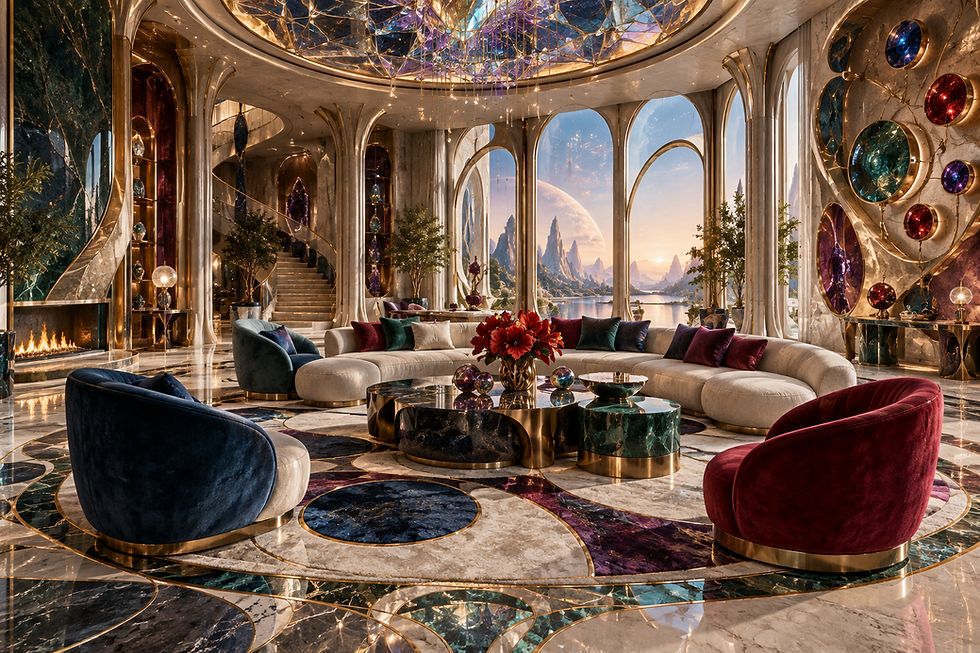
Artistic Maximalism residential interior design concept with newly made furniture and fresh finishes.
Contents
Color in Miami daylight: emerald, ruby, saffron, cobalt—balanced, not blinding
Walls, ceiling, and built-ins: the room’s “frame” for art and pattern
Woodwork and joinery: inlaid wood, grain direction, and crisp edges
Stone and smart alternatives: drama with realistic maintenance
Textiles that carry the concept: embroidered velvet, layered rugs, and tailored drapery
Seating that looks extravagant but sits correctly: sofa and chair ergonomics
Lighting for evening scenes: sculptural glass, layers, and controllable glow
Dining interpretation: a curated feast of pattern, shine, and comfort
Bedroom interpretation: jewel tones as refuge, not stimulation
Craft details that make it feel commissioned: trims, edges, and purposeful repetition
Art and personal collections: placement, spacing, and the “gallery logic” of a home
Adapting the style to a Miami condo or a house: scale, reflection, and real-life use
Commissioning and budget priorities: where the money changes the room most
Hiring FAQs for Miami homeowners planning Artistic Maximalism
A family salon that lives like a gallery—yet feels inviting
Artistic Maximalism suits the Miami homeowner who wants a room to do more: host friends, display art, read with children on a deep sofa, and still feel visually alive at noon and moody after sunset. The idea is not clutter; it’s orchestration—layered color, pattern, and collecting, arranged with clear sightlines and comfortable circulation. If you love emerald next to saffron, sculptural glass against dark wood, and a hand-knotted rug anchoring a room of conversation, this is your language.
For anyone considering residential interior design in Miami, the key is translating “more” into decisions that build a calm, functional plan. Many people begin with a search like “hire best custom residential interior design company near me in Miami Florida” because they want a designer who can control complexity—multiple fabrics, custom millwork, layered lighting, and art placement—without losing comfort. In Miami, that control must also account for bright daylight, glossy reflections, and a lifestyle that shifts between indoor lounging and outdoor views.
Historical precedent and the contemporary direction
Artistic Maximalism is a broad contemporary direction rather than a single historical movement with fixed rules. It shares a spirit of collecting and arranging meaningful objects, but it isn’t a direct continuation of one period. A separate British precedent worth knowing is the Aesthetic Movement (1860–1900), which reconsidered domestic beauty, artistic furniture, and the display of collections—an approach that treated the home as a setting for art and taste rather than strict historical correctness. (See the V&A’s overview of the Aesthetic Movement.) Source
In a 2026 interpretation, the goal is newly manufactured furniture, crisp carvings, clean seams, and fresh fabric—no faux age, no distressed finishes. Historic silhouettes can be referenced as proportions and profiles, not as claims of authenticity. Think: a tailored sofa with a classical curve, a contemporary lounge chair with a high back for reading, a gleaming inlaid cabinet with precise joinery, and a modern rug design executed in hand-knotted construction.
Building the plan: organized abundance and easy circulation
Maximalism becomes comfortable when the floor plan is disciplined. Start by establishing a primary conversation zone: typically a sofa facing two chairs, with a coffee table that allows knees and shins to pass easily. In Miami condos, you may have a long rectangle with a view wall; in a house, you may have multiple openings to dining, terrace, or hallways. Either way, plan a clear circulation path that never cuts through the middle of seating—your “gallery walk” around the room.
A useful approach is to create three bands: (1) a seating band (deep rugs and upholstered volume), (2) a display band (cabinets, consoles, art walls), and (3) a light band (windows, reflections, and layered fixtures). The seating band should be scaled for real lounging: sofa depth that supports both upright conversation and a relaxed curl, chairs with a supportive pitch, and side tables where a drink can land without reaching across cushions.
Organized abundance also depends on negative space. Reserve at least one “quiet” plane: a wall with a single large artwork, a broad expanse of textured plaster, or a tall drapery field. That quiet plane lets emerald, ruby, saffron, and cobalt read as intentional color relationships rather than noise. The room can still be full—just not full everywhere at once.
Color in Miami daylight: emerald, ruby, saffron, cobalt—balanced, not blinding
Miami light is vivid and directional, and it can intensify saturation. Instead of putting four jewel tones on four walls, treat the palette as a system of roles. Choose a dominant color (often emerald in this style) and give it the largest surface area—perhaps velvet upholstery or a large rug field. Then assign two supporting colors (ruby and cobalt) to mid-sized elements like chairs, art mats, or cabinet interiors. Let saffron show up as punctuation: piping, a lampshade lining, a narrow stripe in a rug border, or a single statement stool.
Neutrals are still essential; they just shouldn’t be the only story. Use warm off-white for ceilings to soften evening light, and consider a complex neutral on walls—stone-tinted plaster, pale clay, or a muted parchment—so art frames and textiles read sharply. In a condo with floor-to-ceiling glass, the daylight can bleach delicate tones; choose finishes with enough depth (a velvet pile, a lacquer with color under clear, a wool rug with multiple dye notes) so the palette holds its character at noon.
Also decide where you want reflection. Gloss can amplify cobalt and ruby beautifully, but too much shine across too many planes makes the room restless. Use gloss strategically: a lacquered sideboard, a sculptural glass lamp, a polished stone accent table—then balance with matte plaster, brushed wood, and textiles that absorb light.
Walls, ceiling, and built-ins: the room’s “frame” for art and pattern
Artistic Maximalism needs a strong architectural frame. If walls are thin and blank, the room can feel like furniture floating in a white box. Consider a shallow panel system or pilasters in paint-grade millwork to create rhythm without stealing floor space. The panels can be narrow and tall to complement Miami’s vertical views, and they provide predictable “hang zones” for art—so the wall reads curated even when the collection grows.
For built-ins, prioritize closed storage at the bottom and display above. Closed storage protects the room from visual fatigue: board games, cables, extra throws, and bar supplies disappear. Above, keep shelves deeper than typical so sculptural objects sit confidently, not teetering at the edge. Add integrated picture lights or micro-adjustable accent lighting so your objects feel intentional at night.
Ceilings are often overlooked, yet they’re a powerful maximalist canvas. A subtle ceiling color—an off-white with a hint of warm gray, or even a pale tint pulled from the rug—can make crown profiles and lighting feel more deliberate. If you want pattern overhead, use a restrained motif with a large repeat so it reads as atmosphere rather than a competing artwork.

Artistic Maximalism craftsmanship visualization: fresh textile, finish, and material details proposed for a custom interior.
Woodwork and joinery: inlaid wood, grain direction, and crisp edges
Inlaid wood is central to the style, and it needs to look precise—clean seams, consistent grain selection, and crisp corners. Begin with the substrate and grain direction: for large cabinet doors, a quarter-sawn or rift-sawn veneer can reduce visual “wobble” and reads more architectural. Use grain direction to guide the eye: vertical grain for height on tall doors, horizontal grain for a low credenza that grounds the room.
Inlay works best when it has hierarchy. A fine border stringing can outline a door panel; a bolder geometric field can appear on a bar cabinet front; and a small motif can repeat as a detail on a side table. Ask your designer and millworker to discuss edge treatment early. A sharp edge looks modern and graphic but can chip more easily than a slight chamfer or rounded arris. A tiny bevel can also catch light beautifully in the evening.
Joinery decisions matter because maximalism involves close looking. On a newly built piece, consider how drawers meet face frames, whether reveals are even, and how hardware aligns with inlay. Hardware should feel like jewelry—solid, substantial, and scaled to the pattern—yet it should not fight the woodwork. If the inlay is complex, choose quieter pulls; if the fronts are plain, you can let the pulls become sculptural.
Stone and smart alternatives: drama with realistic maintenance
Stone adds gravity to jewel-tone rooms. A deep green stone can echo emerald upholstery; a ruby-veined slab can play against cobalt lacquer; a creamy stone can calm the palette. In Miami, maintenance is part of the aesthetic decision. Polished surfaces reflect daylight and look crisp, but they can show fingerprints or water spots more readily than honed surfaces, depending on the specific stone and sealer. Honed finishes tend to feel calmer and can suit a family salon where objects move frequently.
Use stone where it earns its keep: coffee table tops, console surfaces, fireplace surrounds, or a low pedestal for a sculpture. Consider edge profiles—square edges read modern; a gently eased edge feels more forgiving in circulation zones. For alternatives, high-quality sintered surfaces or engineered stones can provide consistent patterning and predictable fabrication, but the visual depth differs from natural stone. Choose based on the room’s priorities: if art and textiles are the primary drama, a quieter stone may be the better partner.
Plan maintenance in the specification phase. Ask for product-specific guidance: sealing schedules, suitable cleaners, and whether the stone is sensitive to acids. A maximalist room hosts drinks, flowers, and candles; your tabletop should suit that lifestyle, not demand constant vigilance. Coasters and trays can be designed as part of the composition—beautiful, not apologetic.
Textiles that carry the concept: embroidered velvet, layered rugs, and tailored drapery
Embroidered velvet is a signature move because it holds color in a dimensional way. The pile catches light; embroidery adds scale and narrative. Use velvet strategically on seating that benefits from richness—sofa backs, lounge chairs, or a pair of occasional chairs—then balance with flatter weaves on larger surfaces to keep the room breathable. If everything is velvet, the room can feel visually heavy and acoustically “thick.”
Rugs are the organizing device. A hand-knotted rug can carry multiple jewel tones in a controlled distribution—emerald field, saffron border, cobalt accents, ruby punctuation. Choose a pattern scale that supports furniture placement: large repeats read calmer under multiple legs, while small repeats can look busy once tables and chairs land. If layering rugs, let the bottom layer be quieter (a textured neutral), and place the more patterned piece on top with intentional offsets.
Drapery should respond to Miami light and floor lines. Full-height curtains create a gallery-like backdrop and help the room feel tall and composed. Hem levels relate to the floor: a clean break that kisses the floor or a slight float can look crisp and newly finished; pooling reads romantic but can be impractical with daily use. For lining, decide whether you want light filtering (so colors glow) or room darkening (to reduce light exposure and control evening scenes; sensitive artwork needs its own placement and conservation assessment). Fabric choices should be reviewed beside the wall color in daylight to avoid unexpected color shifts.
Seating that looks extravagant but sits correctly: sofa and chair ergonomics
Maximalism often fails when seating is chosen for silhouette alone. In a family salon, the sofa should invite both conversation and long lounging. Look for a seat height that allows most people to stand up easily, and a seat depth that can be moderated with back cushions—deep enough for comfort, not so deep that guests perch. A bench cushion can look crisp and modern, while multiple seat cushions can offer flexibility and easier maintenance; both can be beautifully tailored.
Chair design is where the room becomes personal. Consider one “reading chair” with a higher back and supportive arms, one “conversation chair” with a more open profile, and one sculptural accent chair that reads like a small artwork. Ergonomically, watch the angle between seat and back: too upright feels formal; too reclined can be awkward for social settings. Ottoman height should align with the seat height so feet rest naturally, and an ottoman can double as a tray surface with a tight, flat top.
Upholstery details are the maximalist signatures: contrast piping in saffron on emerald velvet, a cobalt welt on ruby mohair, or embroidered panels framed by plain velvet borders. These details must be scaled to the furniture. Oversized piping can look cartoonish; too fine and it disappears. Ask for sample “mock-ups” of piping size against the fabric to confirm the proportion before committing.
Lighting for evening scenes: sculptural glass, layers, and controllable glow
Daylight is only half the story. At night, Artistic Maximalism should feel intimate—like the room is lit for art viewing and conversation rather than a single overhead brightness. Plan three layers: ambient (general glow), task (reading and practical use), and accent (art and objects). In Miami, where reflective surfaces are common, glare control is critical. Shade materials, bulb choice, and aiming matter as much as the fixture.
Sculptural glass can be the room’s jewelry: a chandelier with hand-blown forms, a pair of glass-and-brass lamps, or a glowing glass sconce beside a cabinet. Glass looks best when the light source is controlled—diffused bulbs, internal frosted elements, or shades that prevent harsh hotspots. Place table lamps so they sit within reach of seating, and ensure cords are planned early so the room doesn’t end up with visible extensions.
Dimmers are essential to preserve the palette. Emerald and cobalt can read almost black under low light; ruby can become too warm if the lamp color temperature is overly amber. In design development, specify bulb temperatures and beam spreads intentionally, and consider picture lights for key artworks so the room still “reads” when ambient lighting is low.

Artistic Maximalism furniture design concept: new upholstery and a distinctive sculptural form developed for this visual study.
Dining interpretation: a curated feast of pattern, shine, and comfort
In a dining room, Artistic Maximalism becomes ceremonial—without sacrificing comfort. Start with the table: a substantial base that feels stable, with a top material that suits your habits. Wood with inlay can be exquisite, but consider whether you prefer a protective topcoat for easy wiping. Stone tops feel decisive, yet they can be cooler under forearms; a linen runner can solve that while adding another layer of color.
Dining chairs should balance visual richness with long-sit comfort. A chair with an upholstered back panel and a firm seat can be elegant and practical. If you want embroidered velvet, consider placing it on chair backs (less abrasion than seats in many households) and use a coordinating, more resilient textile for the seat. Armchairs at the ends can be slightly broader and more sculptural, giving the room a “host” presence.
Lighting above the table should flatter food and faces. A sculptural glass chandelier can work if it provides soft, controlled light and hangs at a height that preserves sightlines across the table. Use wall washers or sconces to keep the room from feeling like a single pool of light. For art, consider a larger-scale piece or a series with consistent framing—maximalist, but disciplined.
Bedroom interpretation: jewel tones as refuge, not stimulation
In a bedroom, maximalism must soothe. Choose one primary jewel tone—often emerald or cobalt—as the anchor, then use the other colors in smaller, quieter gestures. A headboard in emerald velvet with subtle embroidery can become the room’s central artwork. Keep surrounding planes calmer: walls in a complex neutral, drapery in a solid with texture, and bedding in layered whites with one ruby throw and a saffron accent cushion.
The bed’s proportions matter more than almost any other piece. A tall headboard can make the room feel designed, but it must relate to ceiling height and window placement. Nightstands should be large enough for real use—lamp, book, water—so you don’t end up with clutter that fights the intended composition. Inlaid wood nightstands can look sharp if their pattern is quieter than the headboard textile.
Lighting should support winding down. Use bedside lamps or sconces that allow reading without lighting the entire room. If you include sculptural glass, choose forms that glow softly rather than sparkle aggressively. Rugs in the bedroom should feel warm underfoot; a hand-knotted rug with a controlled pattern can unify the palette while keeping the rest of the room serene.
Craft details that make it feel commissioned: trims, edges, and purposeful repetition
Maximalism becomes refined through repetition and craft, not randomness. Choose a small set of motifs to repeat: a scallop, a geometric border, a floral curve, a specific metal finish. Repeat it across different scales—perhaps as an inlay border on a cabinet, an embroidered line on a cushion, and the edge profile of a mirror. This creates cohesion even when colors and patterns multiply.
Trims are where custom work shows. Contrast piping, bullion fringe used sparingly, tailored banding on drapery leading edges, and a precise double-needle stitch on cushions can all read “made for the room.” Use trims as punctuation, not wallpaper. One highly trimmed piece—like a pair of accent chairs—can be enough to set the tone while letting other upholstery remain clean.
Edge conditions are another subtle signal. A stone tabletop with a fine eased edge, a wood cabinet with a consistent reveal, a mirror with a narrow bronze frame, and a rug with a bound edge in saffron—these are not loud decisions, but they make the room feel intentional. During design development, request full-size samples of key pairings (fabric with trim, wood with inlay, metal with stone) under Miami daylight.
Art and personal collections: placement, spacing, and the “gallery logic” of a home
Artistic Maximalism is at its best when your collection leads. Start with what you already own: paintings, photography, ceramics, travel objects, books. Decide what deserves primary wall space and what can live on shelves or pedestals. A common mistake is scattering objects evenly across every surface. Instead, build focal moments: one major artwork over a sofa, a clustered salon wall in a corridor-like zone, a single sculptural piece on a pedestal with its own light.
Spacing is the difference between collected and crowded. Leave breathing room around frames, especially when wall colors are saturated. Choose frames that relate to the room’s metal story—brass, bronze, blackened steel—then keep that choice consistent so the wall reads curated. If you have varied art styles, unify by mat color, frame width, or a repeated spacing rule.
For objects, consider scale and backdrop. A cobalt glass piece reads best against a pale wall or light shelf backing; a pale ceramic needs a darker field. If your shelves are inlaid wood, keep object groupings simpler to avoid pattern-on-pattern confusion. And remember: the room will evolve. Build in adjustable shelving, flexible picture hanging systems if appropriate, and a few “open slots” for future finds.
Adapting the style to a Miami condo or a house: scale, reflection, and real-life use
A condo often demands restraint in volume and a smarter approach to reflection. If your living room is open to kitchen and dining, use the rug and seating arrangement to create a defined salon zone. Choose fewer, larger pieces rather than many small ones: one major sofa, two statement chairs, one substantial cabinet. In glassy towers, watch reflective “doubling”—mirrors, glossy lacquer, and shiny stone can multiply visual noise. Balance with matte textiles and quieter wall colors.
In a house, you may have more wall space and the opportunity for architectural framing—panels, built-ins, niches. You can also create a more ceremonial entry into the salon: a console with sculptural glass, a bold artwork, and a controlled lighting cue. If you entertain frequently, plan where guests set drinks, where serving trays land, and how traffic moves between living and dining without brushing delicate objects.
In either case, think about daily routines: children’s homework at the dining table, pets on a sofa corner, open doors to terraces, and Miami humidity considerations for materials and adhesives. Rather than inventing rules, a good design process coordinates selections with the realities of your specific building and lifestyle, and final dimensions, materials, and details are developed for your actual residence.

Artistic Maximalism interior visualization: a second residential composition with newly made furnishings and fresh textiles.
Commissioning and budget priorities: where the money changes the room most
In Artistic Maximalism, budget can disappear into “many things” without changing the room’s core. Prioritize the anchors first: seating comfort and upholstery quality, a rug that sets the palette, and lighting that controls the evening mood. Next, invest in one or two signature custom pieces—often an inlaid cabinet or a tailored sofa with distinctive trim—so the room feels commissioned rather than assembled.
Then allocate thoughtfully to the layers: drapery (because it’s a large visual plane), art lighting (because it makes collections legible), and a few sculptural elements in glass or stone. Save where it won’t be noticed: interior shelf surfaces, secondary side tables, or objects that can be upgraded over time. A maximalist room can start strong with fewer, better pieces and expand as you collect.
Custom work also needs time for sampling and coordination. Expect iterative decisions: fabric approvals under daylight, wood stain matching to existing floors, stone samples to confirm veining scale, and mock-ups for trims and piping. The goal isn’t excess—it’s a controlled composition where every addition has a reason.
Planning your Artistic Maximalism service in Miami
Choosing a designer for Artistic Maximalism starts with evidence of fit. Ask how the team will test the room layout, tailor seating to your household, and carry the approved visual direction into drawings and samples. Compare those answers when your search includes “top residential interior designers near me”. A persuasive proposal should explain the decisions you will approve and who coordinates each specialist.
There is room for Artistic Maximalism within a personal Miami interior design style. The relevant question is how it will respond to your windows, existing architecture, and collections. If your search includes “Miami interior design style”, discuss those conditions before selecting finishes. A compelling photograph is useful inspiration; a residence also needs coherent decisions about everyday use.
When comparing “residential interior design companies near me in Miami, FL” and “Residential Interior Design Company near me in Miami, FL”, ask each firm to identify the scope it is actually pricing. For Artistic Maximalism, a furniture refresh and a room with custom architectural detailing involve different drawings, approvals, and installation responsibilities. Include site measurement, sample review, procurement, and installation coordination as separate line items, then confirm which are included in the engagement.
For an Artistic Maximalism commission, translate “luxury residential interior designer near me in Miami, FL”, “custom residential interior design near me in Miami, FL” and “high-end interior design services near me in Miami, FL” into practical expectations: a considered furniture plan, coordinated finishes, and sample approvals before purchasing. Discuss how visible craftsmanship will be balanced with maintenance and comfort. The most elaborate option is worthwhile only when its proportions and use have been resolved for the room.
If you are comparing “residential interior design services near me in Miami, FL”, “residential interior design services in Miami, Florida” and “residential interior design services near me in Miami, Florida”, bring an annotated floor plan and a short list of priorities to the consultation. Explain what attracts you to Artistic Maximalism, which rooms should change, and which possessions should remain. Ask for a written sequence of concept review, design development, product selection, and installation decisions, with responsibility for each stage made clear.
If you are comparing “custom residential interior design services near me in Miami, Florida” and “custom residential interior design services in Miami, Florida”, bring an annotated floor plan and a short list of priorities to the consultation. Explain what attracts you to Artistic Maximalism, which rooms should change, and which possessions should remain. Ask for a written sequence of concept review, design development, product selection, and installation decisions, with responsibility for each stage made clear.
For homeowners looking for “near me, in Miami, Florida”, the service location for this Artistic Maximalism guide is Miami, Florida. Share your actual property location and access conditions when inquiring. The images are interior design concepts; your room dimensions, building conditions, and selected products will guide the final design and scope.
Hiring FAQs for Miami homeowners planning Artistic Maximalism
How do I “hire best custom residential interior designer near me in Miami, FL” for Artistic Maximalism?
Ask to see concept presentations that manage complexity: multiple patterns, layered lighting, and art placement without losing circulation. Inquire about their sampling process (fabric, stone, wood), how they coordinate custom upholstery, and how they document details like piping size, cushion comfort, and shelf lighting. “Best” should mean best for your priorities: family use, collecting, and a clear plan for installation sequencing.
I’m searching “hire best residential interior designer near me in Miami, FL”—what should I bring to the first meeting?
Bring a short list of what you’ll keep (art, rugs, heirlooms), a few inspiration images, and honest notes about how you live—hosting, pets, children, reading habits, TV needs. For maximalism, also bring color preferences and any “no” colors. Photos of your space in morning and late afternoon help a designer understand Miami daylight, reflections, and where jewel tones will intensify.
Are there “Top interior designers in Miami” or “Luxury interior designers Miami” who specialize in art-filled rooms?
Miami has many strong designers; “top” and “luxury” are useful filters when they reflect process and coordination skill, not labels. For an art-filled maximalist salon, look for an Interior designer in Miami who can plan lighting for artwork, specify textiles with confidence, and draw custom millwork details (not just choose décor). Ask how they handle procurement and trade coordination without overcomplicating the plan.
Defining the custom commission
If your starting point is “hire best custom residential interior design company near me in Miami Florida”, make the Artistic Maximalism brief specific: identify the focal room, the signature furniture piece, and the daily activities it must support. Ask for an explanation of how new fabrication, finish sampling, and comfort testing will be handled before you commit to custom orders.
Discuss your Artistic Maximalism home with Studio
Your search to “hire best custom residential interior design company near me in Miami Florida” can become a focused conversation about your Artistic Maximalism project. Explore Custom Construction Company’s residential interior design service, then contact Studio with your plans and priorities. Call (786) 909-3381 or email info@customconstructioncompany.com to ask about scope and availability in Miami, Florida.
Explore related design styles: Collectible Design Interiors, Art Nouveau Revival, and Jewel-Toned Contemporary. Browse the Interior Design Styles library to compare historical influences, furniture, materials, and original residential design concepts.


Comments