
Contemporary Rococo Residential Interior Design Near Me in Miami, FL


Contemporary Rococo residential interior design concept with newly made furniture and fresh finishes.
Contents
A joyful contemporary Rococo salon in Miami—who it suits, and what it changes in daily life
Where Rococo came from (briefly), and what “contemporary” means here
A 2026 interpretation: new furniture, fresh fabric, and crisp carving—without nostalgia
Spatial composition: asymmetry that still feels calm, and circulation that stays comfortable
Color relationships: celadon, blush, ivory, champagne gold—tuned to Miami daylight
Wood, grain direction, and joinery: making delicate carving look intentional, not flimsy
Stone and convincing alternatives: marble drama with realistic care
Textiles: silk embroidery, trims, and upholstery that stays crisp and tailored
Seating design and ergonomics: bergère comfort, sofa proportions, and believable lounging
Lighting for evening scenes: crystal, candles (electrical), and layered control
Bedroom interpretation: Rococo intimacy without overwhelming the room
Dining interpretation: carving and ceremony that still welcomes long meals
Craft details that make the concept feel “made for you”: mouldings, mirrors, and hardware
Art, mirrors, and personal collections: how to display without clutter
Adapting the style to a Miami condo or a Miami house—without forcing it
Commissioning and budget priorities: where custom matters most, and where to simplify
A joyful contemporary Rococo salon in Miami—who it suits, and what it changes in daily life
A contemporary Rococo room is for someone who wants ceremony without stiffness: a living space that feels buoyant in the day and candlelit at night, with fresh carving, light-catching crystal, and upholstery that looks newly tailored, not inherited. In Miami, it especially suits homeowners who love art, hosting, and color, and who don’t want their residence to read as minimal or industrial. The reward is emotional clarity—an intentional, optimistic room that still functions as a modern lounge.
This style works best when you enjoy “pretty” details but need real comfort: deep seat cushions, proper reading light, and circulation that lets guests move without sidestepping fragile objects. The point is not to mimic a museum period room. It’s a new interior with contemporary reliability—newly made frames, new textiles, and clean finishes—using Rococo’s shell-inspired vocabulary to shape a lively, welcoming salon.
If you’re exploring residential interior design with Custom Construction Company in Miami, this style changes the design brief immediately: more custom millwork profiles, tighter alignment between upholstery and wood carving, and lighting designed to shimmer across gilded detail. It’s the kind of project people search for when they type “hire best custom residential interior design company near me in Miami Florida”—not as a claim, but as a way to find a team that can coordinate fine trades, samples, and site constraints with patience.
Where Rococo came from (briefly), and what “contemporary” means here
Rococo emerged in France in the 1720s–1730s, with a decorative vocabulary that favors asymmetrical C and S curves, shells, and acanthus—distinct from the heavier drama of Baroque and the later return to restraint in Neoclassicism. It’s an ornamental language built for salons: intimate rooms for conversation, music, and display. (V&A: The Rococo style: an introduction.)
“Contemporary Rococo,” as used in this guide, is not a historical movement and does not imply antique provenance. It means newly carved woodwork, newly manufactured furniture, and entirely fresh fabrics and trims—designed with today’s ergonomics and Miami living in mind, while borrowing Rococo’s asymmetry and shell-like flourish.
A 2026 interpretation: new furniture, fresh fabric, and crisp carving—without nostalgia
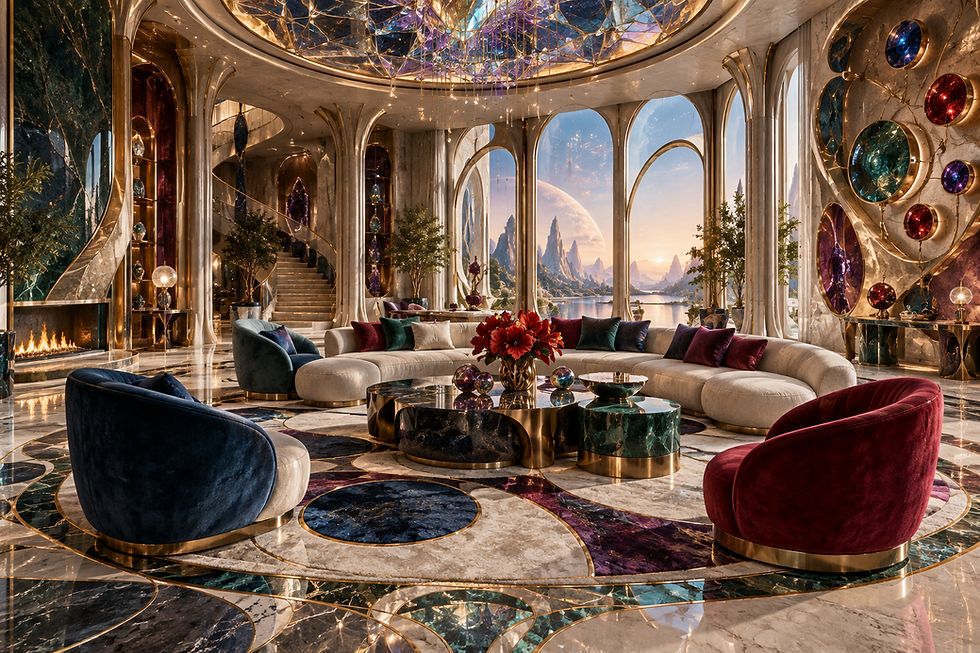
For 2026, the most convincing Rococo-inspired rooms feel freshly constructed rather than “old-world.” Think crisp, precise carving with clean edges; gilt that reads like a controlled champagne-gold finish, not a timeworn surface; and textiles that look newly woven and perfectly upholstered. The visual concept in Miami is a bright salon: blush seating, a comfortable celadon bergère as the signature chair, ivory walls with selective ornament, and clear crystal lighting that sparkles against daylight.
The furniture should be developed around your floor plan, with its proportions checked before fabrication. Contemporary comfort comes from seat depth, spring or webbing selection, cushion construction, and arm height—choices you confirm in person, not in a catalog thumbnail. Your designer can propose silhouettes—bergères, settees, cabriole-leg side chairs—then refine them with modern requirements: a sofa that supports lounging, a chair that welcomes a tall guest, and a room that still accommodates speakers, HVAC returns, and concealed outlets without visual clutter.
In Miami, this approach also respects how quickly bright daylight shows every misalignment. When carving lines are straight where they should be, and gilded profiles meet clean plaster reveals, the room reads intentional rather than busy. Newness is the point: immaculate upholstery, sharp seams, and polished stone—balanced with practical maintenance and protective strategies.
Spatial composition: asymmetry that still feels calm, and circulation that stays comfortable
Rococo is famously asymmetrical, but a livable room still needs quiet structure. Begin with a conversational “oval” rather than a hard rectangle: a sofa facing two chairs, with a third chair slightly offset to create the asymmetrical flourish. Keep the main circulation path clear—especially in a Miami condo where the living room often doubles as a passage to the terrace. A good target is to preserve a continuous walkway that doesn’t cut through the center of seating.
Use a focal wall, but avoid turning the room into a stage set. One approach: a single feature zone—perhaps a mirror with a shell crest and slim gilded frame—anchored over a low console. Then keep the remaining walls calmer with subtle panel moulding or a painted plaster finish. This lets the furniture carry the Rococo energy while the envelope remains modern and breathable.
Coffee table placement is where comfort is won or lost. In a salon, a round or softly lobed table works better than a sharp rectangle. Size it so guests can reach a drink without leaning forward excessively. If you like a dramatic center table in marble, keep the pedestal footprint generous enough to feel stable and ensure knee clearance around the perimeter; for smaller rooms, a pair of nesting tables keeps circulation flexible.
Color relationships: celadon, blush, ivory, champagne gold—tuned to Miami daylight
Miami daylight can bleach color or make it look overly sweet if it’s not balanced. The palette here—celadon, blush, ivory, champagne gold—works when each color has a job. Let ivory be the largest field (walls, ceiling, and perhaps drapery), celadon be the “cool anchor” (the bergère, a lacquered cabinet, or a large area rug motif), and blush be the social warmth (sofa or pair of lounge chairs). Champagne gold belongs in precise doses: frame edges, carved accents, and lighting details.
Undertones matter more than names. A celadon that leans too minty can fight tropical greenery outside; a better direction is a softened gray-green that stays elegant at noon and at sunset. For blush, avoid a loud pink by choosing a slightly dusty, complex tone that reads like a neutral in evening light. Ivory should not be stark white; a warmed ivory supports gilding and reduces glare.
To keep the room modern, limit contrast edges. If you use gilded frames, keep wall paint and ceiling paint close in value so you don’t get a choppy outline around every profile. Add depth with texture: silk embroidery, a low-sheen wall finish, and a rug with tonal patterning. Miami’s light will do the rest—your job is to ensure it lands on a coherent set of undertones.

Contemporary Rococo craftsmanship visualization: fresh textile, finish, and material details proposed for a custom interior.
Wood, grain direction, and joinery: making delicate carving look intentional, not flimsy
The signature of this style is delicate carving that still feels structurally sound. That begins with wood selection and grain direction. Long, thin elements—like chair rails, cresting, and apron curves—benefit from grain that follows the length, reducing the chance of visual “short grain” weakness. Where curves are dramatic, a well-planned laminated blank can allow carving depth without forcing the grain to run the wrong way.
Joinery should be treated as part of the design, even when it’s hidden. A chair frame that’s meant to last needs more than decorative brackets: think robust joints at the seat rails, properly sized corner blocks, and careful integration of carved appliqués so they don’t read like glued-on ornaments. Ask to see how the crest attaches to the back frame, and how cabriole legs meet the seat—these are the stress points that determine whether “delicate” reads as refined or precarious.
For finish, champagne-gold looks best when it is controlled: a consistent sheen level, clean transitions at edges, and intentional shadow in recesses. Overly bright metallic paint can flatten carving; a layered finish (still new, still immaculate) helps the relief read under Miami’s strong daylight. Final profiles, species, and finish schedules should be developed for your actual residence and usage—especially if you have pets, frequent entertaining, or direct sun.
Stone and convincing alternatives: marble drama with realistic care
Marble belongs naturally in contemporary Rococo: it’s luminous, cool to the touch, and pairs beautifully with blush and celadon. In a Miami salon, the most useful application is a center table top, a console surface, or a small plinth for sculpture. Favor edges that echo the room’s language—ovals, soft lobes, or a gentle ogee profile—rather than severe chamfers that feel modernist.
Maintenance is a real decision, not a footnote. Marble can etch or stain depending on the specific stone and finish, and the way your household uses the room. If you want the look with less anxiety, consider engineered stone, porcelain slab, or a high-quality solid-surface material with a marble-like veining pattern. These can be specified with a finish that still catches candlelight, and they can be detailed with a traditional edge to keep the Rococo impression.
For floors, Miami condos often have existing surfaces you may keep. A large rug can provide the “stone-like” calm if you choose a design with a pale ground and subtle veining or scroll motifs. If you are selecting new stone flooring in a house, think about slip, reflectance, and the way grout lines will read next to delicate furniture legs. The room should feel smooth, not busy at the floor plane.
Textiles: silk embroidery, trims, and upholstery that stays crisp and tailored
Rococo interiors live or die on textile choices. The goal is not to cover everything in pattern; it’s to orchestrate a few textiles so they feel curated. A strong starting point is a solid blush velvet or textured chenille for the main sofa, paired with a celadon chair in a satin weave or a tight, high-quality linen blend that looks cleanly tailored. Then add silk embroidery selectively—on two or three pillows, a bench cushion, or a single drapery band—so it reads special, not fussy.
Trims should be used like jewelry. A narrow gimp or cord can outline a chair back and clarify the silhouette in bright daylight. A small bullion fringe can be beautiful on a settee cushion, but keep the scale controlled; overly long fringe can look theatrical and collect dust. If you love tassels, use them as tiebacks or on a single accent pillow rather than everywhere.
Drapery matters because Miami light is intense and changing. Layering is often the practical answer: a sheer that softens daytime glare plus a lined drape that controls evening privacy. Hem lengths should relate to the floor level—tailored to skim or break intentionally—so the room looks finished. The fabric hand should match the room’s mood: crisp for a brighter salon, more fluid for a romantic evening scene.
Seating design and ergonomics: bergère comfort, sofa proportions, and believable lounging
The “original celadon bergère” can be the room’s signature piece if it’s designed for real sitting. A bergère traditionally encloses the sitter with upholstered arms and a shaped back; in a contemporary version, keep that embracing feeling but confirm the details that affect comfort: seat height relative to your leg length, seat depth that supports both upright conversation and relaxed reading, and a back angle that doesn’t force you forward. A small lumbar cushion in matching celadon can refine support without changing the silhouette.
For the main sofa, avoid making it too shallow in pursuit of period correctness. A modern salon needs a sofa that fits the way people sit now—sometimes curled, sometimes leaning in. Consider a gently serpentine front rail (a nod to Rococo) paired with cleaner side panels so it doesn’t look overly ornate. The arms can be scroll-inspired, but keep the top wide enough to feel comfortable under the forearm.
Side chairs should not be decorative afterthoughts. If you’re choosing carved side chairs for a dining area, ensure the back is shaped to allow extended sitting, and confirm how upholstery will be attached so it looks tailored: tight, even padding on the back, clean welt lines, and no visible puckering at corners. In all cases, final dimensions and cushion construction should be developed around your household and the exact room layout.
Lighting for evening scenes: crystal, candles (electrical), and layered control
A contemporary Rococo room should transform after sunset. Crystal is the signature: clear crystal pendants, drops, or prisms that scatter light across gilding and pale walls. In a Miami living room, a chandelier can work even with modern ceilings if it’s proportioned correctly—large enough to feel intentional, high enough to maintain comfortable head clearance, and placed to align with the main seating zone rather than the room’s geometric center.
Layering is essential. Use a chandelier for sparkle, then add wall sconces that wash panel moulding or highlight art, and finally add table lamps for reading. Shade materials matter: a warm ivory shade keeps blush and celadon flattering at night. Dimmers and scene settings let you choose “conversation,” “reading,” and “late evening” without rethinking the room each time.
Candlelight can be interpreted safely as electric: small rechargeable lamps on side tables, or a low cluster of glass-encased lights on the console. The point is to create tiny points of glow that echo crystal refractions. In Miami, where outdoor views are often part of the night experience, control reflections by balancing interior brightness—too much overhead light turns your windows into mirrors.

Contemporary Rococo furniture design concept: new upholstery and a distinctive sculptural form developed for this visual study.
Bedroom interpretation: Rococo intimacy without overwhelming the room
In a bedroom, contemporary Rococo is best when it becomes quieter and more tactile. Start with an ivory envelope and introduce ornament in fewer, larger gestures: a curved headboard with a shell-like crest, a champagne-gold trim line, and blush bedding with a celadon throw. Keep the bed as the hero and let the rest of the room breathe, especially if you have a balcony door or a wall of glass.
For nightstands, consider a pair with gentle bombe curves but clean hardware—perhaps a small crystal knob or a polished metal pull that echoes the chandelier. The top surface can be marble or a convincing alternative, but prioritize function: space for water, a book, and a lamp base that won’t feel crowded. If you want a vanity, keep it light: a slender cabriole leg and a wall-mounted mirror with asymmetric Rococo flourishes, so the floor remains open.
Textiles should support rest. Silk embroidery can appear on a decorative pillow or a bed runner, but don’t overload the sleep zone with fussy trims. A lined drape in ivory can look sumptuous while still reading modern if the pleats are crisp and the hardware is minimal. The bedroom’s Rococo should feel like a soft echo of the salon, not a duplicate.
Dining interpretation: carving and ceremony that still welcomes long meals
A Rococo-inspired dining room in Miami should encourage conversation and comfort, not formality for its own sake. Begin with the table: an oval top is the simplest way to bring Rococo curves into a contemporary plan. A pedestal base can be carved and gilded, but confirm knee room around the perimeter and avoid overly busy under-structure that interferes with chairs. A stone top can be dramatic, but consider how it will sound and feel—add felt pads and choose glassware thoughtfully.
Dining chairs are the key comfort decision. A carved frame can be airy and elegant, but the seat should be padded enough for long dinners. Consider a blush or ivory upholstery with a subtle woven pattern, then add celadon through a runner, a wall color, or a bar cabinet. If you love embroidery, place it on chair backs rather than seats to reduce wear in the highest-contact zone.
Lighting should be warmer and slightly lower than in the salon. A crystal fixture still works, but the dining table wants a defined pool of light with soft edges. Wall sconces can provide flattering side light that makes faces look good. Keep storage refined: a console with curved doors and a champagne-gold edge detail can hold linens and serveware without introducing bulky mass.
Craft details that make the concept feel “made for you”: mouldings, mirrors, and hardware
The most persuasive contemporary Rococo rooms rely on a few well-executed craft details rather than a hundred small decorations. One example is selective wall moulding: instead of fully ornate panels everywhere, use calm rectangular fields with a single asymmetrical corner flourish in one or two locations. This keeps the room legible and lets the furniture sing. Another high-impact detail is a mirror: a slim frame with shell and acanthus relief at the crest, placed to catch daylight without creating glare.
Hardware and metal finishes should be consistent with champagne gold, but not matchy. A slightly warmer gilt on carved wood can live alongside a slightly cooler brushed metal on cabinet pulls, as long as both sit within the same family and sheen. Door levers, switch plates, and vent grilles (where visible) are often overlooked; selecting refined, simple profiles prevents the room from looking “themed.”
Built-ins can be quietly Rococo: a curved bookcase end panel, an arched niche, or a console with a shaped apron. The tradeoff is time and coordination—fine profiles require careful shop drawings and site verification. The advantage is that the room feels authored, not purchased. Visualizations can propose these gestures, then details are refined once your residence is measured and your priorities are clear.
Art, mirrors, and personal collections: how to display without clutter
Rococo rooms love art, but the display needs editing. Choose one “hero” artwork—perhaps a contemporary figurative piece or a botanical—then give it generous breathing room on an ivory wall. A gilded frame can be ornate, but keep the matting and spacing clean. If you have multiple works, group them with a consistent baseline or consistent spacing; asymmetry can be planned, not accidental.
Collections look best when they’re treated as a single composition. Instead of scattering porcelain or sculpture across every surface, create one curated vignette: a console with two tall objects and one low object, or a cabinet with glass doors and interior lighting that makes the pieces feel intentional. Clear crystal elements—vases, bowls, small objets—can echo the chandelier without competing with it.
Mirrors are both decorative and practical in Miami. They can bounce daylight deeper into a condo and make evening candle-like lighting feel multiplied. Place mirrors where they reflect something worth seeing: greenery, artwork, or a chandelier—rather than a TV or an unstyled corridor. Consider sightlines from the entry; a Rococo mirror can be the first signal that the room is playful and precise.
Adapting the style to a Miami condo or a Miami house—without forcing it
In a condo, the main constraint is typically scale: narrower rooms, shorter clearances, and fewer “blank” walls due to glazing. The solution is to concentrate Rococo moments. Use one exceptional chair (the celadon bergère), one strong chandelier, and one mirror wall, then keep other pieces simpler. Select furniture with legs to show floor area, and favor round tables that ease circulation. A large rug can define the salon without adding visual noise to perimeter walkways.
In a house, you can expand the language across connected rooms, but transitions should be controlled. A salon can carry the most ornament, while adjacent areas—hallways, family rooms—use the palette and a few profiles without repeating every flourish. Think of it as a theme with variations: celadon appears in one room as upholstery, in another as lacquer, and in another as art.
In both cases, Miami’s climate and lifestyle push you toward resilient choices: fabrics that can be cleaned according to manufacturer guidance, finishes that won’t show every fingerprint, and layout decisions that support indoor-outdoor living. The style should feel joyful, not precious. Final specifications and dimensions should respond to your actual windows, views, and how you host.

Contemporary Rococo interior visualization: a second residential composition with newly made furnishings and fresh textiles.
Commissioning and budget priorities: where custom matters most, and where to simplify
A contemporary Rococo room can be budgeted intelligently by choosing where craftsmanship carries the most visual weight. Custom carving is most impactful on a few hero pieces: a bergère frame, a mirror, a console apron, or a chandelier medallion detail. Upholstery is another priority because it affects both appearance and comfort; it’s worth investing in high-quality cushion construction and precise tailoring. Stone or stone-look surfaces should be selected based on your daily habits and how much maintenance you’re comfortable with.
Where to simplify: keep some casework clean-lined, let wall treatments be restrained, and choose fewer—but better—decorative objects. Instead of multiple small gilded frames, pick one large mirror and one major artwork. Instead of many patterned fabrics, use one embroidery moment and one textured solid. This approach also reduces coordination risk, because fewer complex elements need to align perfectly.
Working with an Interior designer in Miami is largely about managing decisions in the right order: layout and circulation first, then major furniture proportions, then finishes and lighting, then textiles and art. Custom Construction Company can develop concept visualizations, sample palettes, and trade-ready specifications as part of residential interior design services in Miami, Florida, with the understanding that final details are developed for the actual residence after measurement, review, and approvals.
Planning your Contemporary Rococo service in Miami
Choosing a designer for Contemporary Rococo starts with evidence of fit. Ask how the team will test the room layout, tailor seating to your household, and carry the approved visual direction into drawings and samples. Compare those answers when your search includes “hire best residential interior designer near me in Miami, FL”, “best residential interior designer near me in Miami, FL” and “top residential interior designers near me”. A persuasive proposal should explain the decisions you will approve and who coordinates each specialist.
There is room for Contemporary Rococo within a personal Miami interior design style. The relevant question is how it will respond to your windows, existing architecture, and collections. If your search includes “Miami interior design style”, discuss those conditions before selecting finishes. A compelling photograph is useful inspiration; a residence also needs coherent decisions about everyday use.
When comparing “residential interior design companies near me in Miami, FL”, ask each firm to identify the scope it is actually pricing. For Contemporary Rococo, a furniture refresh and a room with custom architectural detailing involve different drawings, approvals, and installation responsibilities. Include site measurement, sample review, procurement, and installation coordination as separate line items, then confirm which are included in the engagement.
For a Contemporary Rococo commission, translate “luxury residential interior designer near me in Miami, FL”, “custom residential interior design near me in Miami, FL” and “high-end interior design services near me in Miami, FL” into practical expectations: a considered furniture plan, coordinated finishes, and sample approvals before purchasing. Discuss how visible craftsmanship will be balanced with maintenance and comfort. The most elaborate option is worthwhile only when its proportions and use have been resolved for the room.
If you are comparing “residential interior design services near me in Miami, FL”, “residential interior design services near me in Miami, Florida” and “custom residential interior design services near me in Miami, Florida”, bring an annotated floor plan and a short list of priorities to the consultation. Explain what attracts you to Contemporary Rococo, which rooms should change, and which possessions should remain. Ask for a written sequence of concept review, design development, product selection, and installation decisions, with responsibility for each stage made clear.
If you are comparing “custom residential interior design services in Miami, Florida”, bring an annotated floor plan and a short list of priorities to the consultation. Explain what attracts you to Contemporary Rococo, which rooms should change, and which possessions should remain. Ask for a written sequence of concept review, design development, product selection, and installation decisions, with responsibility for each stage made clear.
For homeowners looking for “near me, in Miami, Florida”, the service location for this Contemporary Rococo guide is Miami, Florida. Share your actual property location and access conditions when inquiring. The images are interior design concepts; your room dimensions, building conditions, and selected products will guide the final design and scope.
Hiring FAQs for a contemporary Rococo project in Miami
How do I “hire best custom residential interior designer near me in Miami, FL” for contemporary Rococo?
Look for someone who can show a process, not just pretty images: measured planning, furniture scale studies, finish samples in daylight, and coordination with fabricators and installers. Contemporary Rococo requires control of small details—carving depth, sheen levels, trim scale, and upholstery tailoring—so ask how the designer documents custom pieces (drawings, mockups, finish samples) and how they manage revisions after site verification in Miami.
When people search “Top interior designers in Miami,” what questions should I ask to compare fairly?
Ask about scope clarity and communication cadence: what deliverables you receive (plans, elevations, finish schedules, furniture specs), how purchasing is handled, and how site conditions are verified. Then ask style-specific questions: how they keep Rococo ornament from becoming clutter, how they plan lighting for crystal and gilding, and how they adapt the palette to Miami daylight. “Top” should mean fit for your project, not a generic label.
What’s the difference between “Luxury interior designers Miami” and a “Residential Interior Design Company near me in Miami, FL”?
“Luxury interior designers Miami” is often a shorthand for high-touch detailing and access to premium fabrication, but a Residential Interior Design Company near me in Miami, FL may emphasize end-to-end coordination: drawings, procurement, trade management, and installation planning. For contemporary Rococo, you want both sensibilities—refined taste plus operational structure—because the style depends on many interlocking components arriving and fitting correctly.
Defining the custom commission
If your starting point is “hire best custom residential interior design company near me in Miami Florida”, make the Contemporary Rococo brief specific: identify the focal room, the signature furniture piece, and the daily activities it must support. Ask for an explanation of how new fabrication, finish sampling, and comfort testing will be handled before you commit to custom orders.
Discuss your Contemporary Rococo home with Studio
Your search to “hire best custom residential interior design company near me in Miami Florida” can become a focused conversation about your Contemporary Rococo project. Explore Custom Construction Company’s residential interior design service, then contact Studio with your plans and priorities. Call (786) 909-3381 or email info@customconstructioncompany.com to ask about scope and availability in Miami, Florida.
Explore related design styles: Contemporary Baroque, Belle Epoque, and Art Nouveau Revival. Browse the Interior Design Styles library to compare historical influences, furniture, materials, and original residential design concepts.


Comments