
Contemporary Royal Classic Residential Interior Design Near Me in Miami, FL


Contemporary Royal Classic residential interior design concept with newly made furniture and fresh finishes.
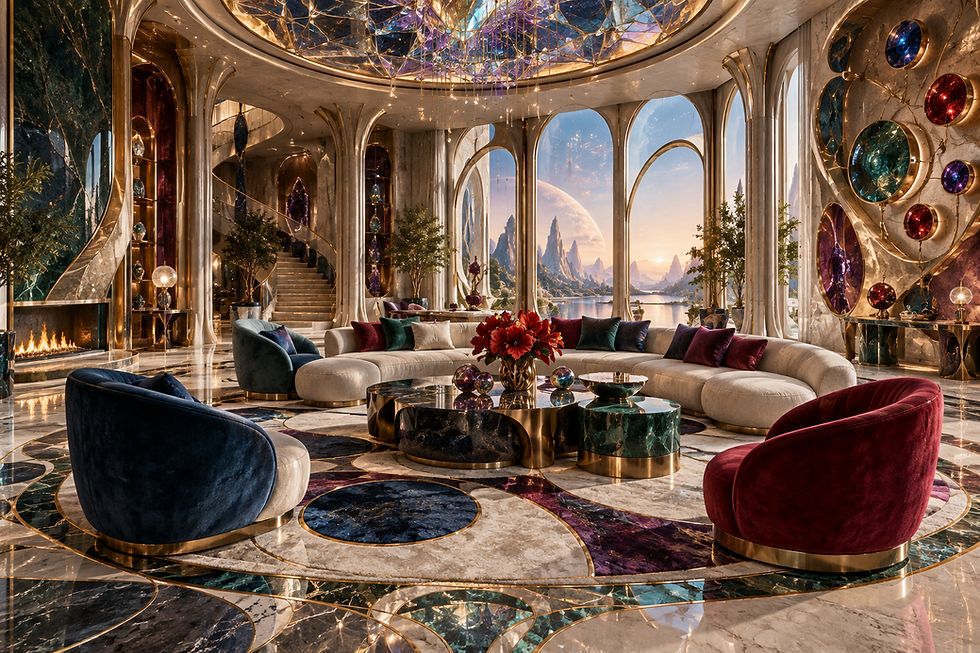
A Contemporary Royal Classic interior is for the Miami homeowner who wants ceremony without discomfort: a room that feels composed the moment you enter, yet lives easily during daylight and becomes quietly theatrical at night. In this direction, cream walls and pale stone set an airy, waterfront baseline; fresh gold leaf adds precision rather than glare; ruby velvet provides weight where the body meets furniture; and midnight blue controls contrast so the room stays calm. The result suits a grand salon for hosting, and an oval-bed suite that treats rest as a designed experience—newly made, crisply finished, and tailored to your residence.
If you’re considering this approach as part of a whole-home upgrade, Custom Construction Company can develop the concept into a proposed room-by-room plan through its residential interior design service in Miami, coordinating layout, millwork intent, finish schedules, and procurement strategy so the room reads as a unified composition.
When you search “hire best custom residential interior design company near me in Miami Florida”, compare how each team will develop the particular rooms, materials, and custom furniture you want. For a Royal Classic residence, that means a clear approach to carved profiles, fresh upholstery, coordinated finishes, and comfortable room proportions.
Contents
Historical roots—what this style borrows, and what it doesn’t
2026 interpretation: newly built grandeur, fresh fabric, crisp carving
Spatial composition: how to plan a salon that feels formal and still circulates
Miami daylight: sophisticated color relationships in cream, gold, ruby, and midnight blue
Woods, grain direction, and joinery: what makes “new classical” look precise
Stone and alternatives: fluted pale marble without unrealistic maintenance
Textiles: silk jacquard, velvet, and embroidery in a livable schedule
Seating design: carved frames, believable ergonomics, and how to avoid “showchair syndrome”
Tables and display: keeping crystal, gilding, and daily life compatible
Lighting: daylight restraint, evening ceremony, and how gold leaf behaves under LEDs
The oval-bed royal suite: how to design an intimate room with a grand silhouette
Dining interpretation: formal geometry that still works for modern hosting
Original craft details: where the “royal” effect is actually built
Art and personal collections: how to curate without breaking the composition
Adapting the style to a Miami condo or a house—without forcing the same solution
Commissioning custom pieces: a realistic roadmap and budget priorities (without guesswork)
Choosing residential interior design services near me in Miami, FL
Historical roots—what this style borrows, and what it doesn’t
Contemporary Royal Classic is a new hybrid design direction: it draws inspiration from European courtly interiors while staying honest about chronology. Seventeenth‑century French royal furnishing under Louis XIV emphasized carved and gilded wood, precious metal effects, and highly orchestrated interiors—an approach documented by the Metropolitan Museum’s overview of furnishings from 1654–1715. The later Rococo vocabulary includes asymmetric curves and shell-derived ornament, as explained in the V&A introduction to Rococo. These are distinct design languages rather than interchangeable gold-chair labels. This 2026 interpretation selectively borrows proportion, symmetry, and craft cues—without presenting newly manufactured pieces as historical antiques. (Source: Metropolitan Museum—Furnishings during the reign of Louis XIV)
2026 interpretation: newly built grandeur, fresh fabric, crisp carving
In Miami, this style works best when it looks intentionally new—clean gilding, sharp edges, and immaculate textiles—because bright daylight punishes muddiness. Think of the room as a contemporary envelope that hosts classical objects: smooth plaster or crisp paneling, precise base details, and modern mechanical performance hidden behind traditional profiles. Newly manufactured furniture is central here: carved frames that are geometrically consistent, gilded with controlled sheen, and upholstered in velvet that holds a deep ruby tone without looking heavy.
A practical way to start is with two concept anchors. First: a grand ivory and fresh-gold salon with ruby upholstered chairs. Second: an oval-bed suite where the bed becomes architecture—its silhouette reading as a shape in the room rather than a standard rectangle. Each anchor then dictates secondary decisions: wall articulation, drapery depth, lighting temperature, and how midnight blue appears in limited, deliberate doses so it sharpens cream and gold rather than competing with ruby.
Spatial composition: how to plan a salon that feels formal and still circulates
A royal-classic salon fails when furniture becomes a museum perimeter. The goal is an organized center with generous circulation lines that feel like boulevards—especially in Miami homes where entertaining often moves between living room, terrace, and kitchen. Begin with an axis: a centered focal wall (fireplace concept, art wall, or media wall designed to disappear) and a clear opposing axis (window wall or entry). Align the main seating group to this axis so the room reads composed from the entry.
Then build two rings of movement. The outer ring is a continuous pathway along the perimeter—wide enough for two people to pass without turning sideways. The inner ring is the service gap between cocktail table and seating: ample for knees, crossing legs, and setting down drinks without perching. Symmetry helps, but strict mirroring isn’t required; balanced “visual weight” can be achieved by pairing a sofa with two armchairs, then offsetting with a console and a tall lamp or sculptural object.
In condo footprints, the salon may share space with dining; in houses, it may connect to a double-height foyer. Either way, the key is to avoid blocking the long Miami view lines. Royal Classic thrives on long sightlines because carved profiles read best at a distance; too many small objects compress the effect.
Miami daylight: sophisticated color relationships in cream, gold, ruby, and midnight blue
Miami light is abundant and reflective, especially near water. That means cream can wash out, gold can glare, ruby can shift toward orange, and midnight blue can go nearly black. The fix is to treat each color as a calibrated material choice, not just a paint selection.
For cream, choose a warm-leaning neutral with enough pigment to hold its presence against bright glazing. On large walls, consider a finish with subtle depth—smooth plaster or a finely rolled matte that avoids sparkle. For gold, avoid “all-over shine.” Fresh gold leaf is most successful when used on carved highlights, thin moldings, or a limited number of statement frames, and kept away from broad flat planes where it can look like a mirror in sun.
Ruby should appear where touch is expected: seat cushions, inside backs, or a headboard field. Midnight blue is best as a contour color: piping, fringe, a narrow band on a border, or an inky lacquered side table that reads as a shadow. In practice, your palette should be weighted toward cream and pale stone (largest surfaces), then ruby (primary upholstery), with gold as the linework and midnight blue as the punctuation.

Royal Classic craftsmanship visualization of new silk jacquard, ruby velvet, and freshly gilded carving.
Walls and ceiling: modern envelope, classical legibility
A Contemporary Royal Classic room benefits from walls that are “architectural” enough to frame furniture. Flat drywall can work, but it asks furniture to do all the work, which often leads to overbuying pieces. Instead, plan wall articulation that is consistent in spacing and proportion: evenly sized panels, a clear chair rail datum, and centered door and window treatments. The point is not ornate relief; it’s legibility—so the eye understands the room’s geometry and the furniture can look intentional rather than scattered.
Ceilings matter as much as floors in a royal-classic vocabulary. If ceiling height is modest, avoid heavy coffers. Use a simple perimeter build-down to create a shadow line, then place a chandelier or lantern on center. If height is generous, a shallow coffer pattern or a ceiling medallion can focus the room without lowering it visually. In Miami condos with concrete slabs, the design often becomes a negotiation between minimal dropped areas for lighting and keeping the ceiling feeling open; a small number of well-placed soffits tends to look more “designed” than a grid of can lights.
Woods, grain direction, and joinery: what makes “new classical” look precise
Royal Classic furniture reads expensive when it’s precise: grain is oriented intentionally, joinery is clean, and carvings are crisp rather than mushy. For casework (consoles, sideboards, built-ins), specify a veneer strategy that respects the furniture’s geometry. Long horizontal stretches benefit from straight grain that runs left-to-right; tall doors can use bookmatched veneer to emphasize symmetry. If you use figured veneer, keep it controlled—high figure everywhere can feel busy against gilded ornament.
Joinery decisions are not decorative trivia; they change how the piece ages and how it feels when you touch it. Dovetailed drawers and well-fitted runners make daily use quiet and smooth. Frame-and-panel doors help with seasonal movement and keep reveals consistent. For gilded carved wood elements, ask how the carvings are produced and refined: a crisp final profile typically requires hand cleanup even if the roughing is machined. The goal is a clean edge where gilding catches light without fuzziness.
For built-in millwork that echoes classical motifs—fluted pilasters, tapered legs, or carved rosettes—decide early which elements are solid wood, which are stable composites, and where you’ll allow seams. In Miami’s humid climate, stability is comfort: doors that stay aligned and drawers that don’t bind are part of “royal” living.
Stone and alternatives: fluted pale marble without unrealistic maintenance
Fluted pale marble is a signature move in this style, especially as a fireplace surround concept, a console top, or a vanity slab. Marble is beautiful, but it is also honest: it can etch from acids and stain if not cared for. If you love the look but want less vigilance, consider stone alternatives that hold a similar softness—high-quality engineered surfaces or porcelain slabs that mimic pale marbles while offering better resistance to etching. These are not “fake marble”; they are different materials with different performance.
Fluting adds its own considerations. It creates shadow and texture, but it also collects dust and requires careful detailing at the base and top so it can be wiped. Specify flutes with enough radius to clean, and ensure the fluted faces have a protective finish appropriate to the chosen material. On floors, pale stone works best with a honed finish: it reduces glare in Miami sun and feels grounded with cream walls. Polished stone can look spectacular, but it amplifies reflections and shows tracking more readily.
Textiles: silk jacquard, velvet, and embroidery in a livable schedule
Textiles make Contemporary Royal Classic feel human. The brief’s silk jacquard and ruby velvet are not just “rich” choices—they are texture strategies. Velvet absorbs light, keeping ruby deep and steady across the day. Silk jacquard reflects in a patterned way, adding movement without adding color. The best results come from deciding where each textile lives: velvet where bodies contact, jacquard where light can skim.
For drapery, consider a layered approach: a sheer that handles Miami daylight privacy, plus a jacquard or lined drape that gives the room evening weight. Pleat choice matters. A tailored pinch pleat reads classic; a ripple fold can look too contemporary unless the rest of the room is restrained. If you add embroidery or trim, keep it disciplined—one motif repeated consistently is more royal than a variety pack of trims.
Upholstery construction should be specified with comfort in mind. A velvet seat can be welcoming, but it should be paired with a cushion fill that supports without collapsing. Ask for sample cuttings in the room’s light: ruby can swing dramatically depending on pile direction and exposure.
Seating design: carved frames, believable ergonomics, and how to avoid “showchair syndrome”
A carved gilded armchair is one of the most recognizable elements in this style, especially in fresh ruby velvet. To make it more than sculpture, set ergonomic targets before you choose the silhouette. Many classical chairs are visually tall but physically shallow; that can feel perched. Adjustments can be made while keeping the historical cue: slightly deeper seat, a supportive pitch, and an arm height that allows relaxed shoulders.
For armchairs, look for:
• A seat height that suits your household (too high reads formal but tires legs).
• Enough seat depth for lounging, balanced by a back that supports shoulder blades.
• Arm pads or a softened arm top if the carved rail is sharp.
For sofas, this style benefits from a structured frame with cushions that look tailored rather than overstuffed. A common solution is a tight back or semi-attached back cushion for a clean façade, combined with a seat cushion system that supports extended sitting. Consider adding a pair of bolster cushions in midnight blue to link the palette while providing lumbar support.
Carved frames should meet upholstery cleanly. Insist on crisp welt placement, consistent pattern alignment (especially in jacquard), and corners that are neatly resolved so the piece looks newly made and intentional.

New ruby velvet armchair design concept with crisp carved detailing and fresh gilding.
Tables and display: keeping crystal, gilding, and daily life compatible
Crystal is part of the material story, but it should be positioned thoughtfully. A crystal-topped table can be stunning, yet it also shows fingerprints and reflections. If your household uses the room daily, consider a stone or engineered-surface cocktail table for durability, and reserve crystal for lighting or a small accent table where it won’t become a constant maintenance task.
Coffee table proportions matter in a formal salon. Too small and it looks timid; too large and circulation collapses. Aim for a table that allows easy reach from every seat and maintains a comfortable walk-around clearance. If the room is symmetrical, consider a centered oval or rounded rectangle: it echoes the oval-bed suite idea and softens the geometry of fluted elements.
Consoles and étagères should be designed as “frames” for objects rather than storage dumps. Integrate concealed drawers for remotes and chargers, and reserve open shelves for curated pieces. The goal is to allow a few high-impact objects—crystal, porcelain, a sculptural bowl—to read clearly against cream walls without visual noise.
Lighting: daylight restraint, evening ceremony, and how gold leaf behaves under LEDs
Lighting is where this style either becomes magical at night or becomes harsh. In Miami, you’ll live with both strong daylight and warm evenings, so plan two distinct scenes: a soft, low-glare daytime baseline and a layered evening composition.
A central chandelier (often crystal) anchors the “royal” idea, but it should not be the only source. Add wall sconces to create vertical glow that reveals gilded carving. Use table lamps to bring light down to the seating plane, where faces and textiles need warmth. Recessed lights can be used sparingly to wash art or highlight architectural panels, but avoid an evenly spaced grid that flattens the room.
Pay attention to color temperature and dimming behavior. Gold leaf can shift from warm to greenish under the wrong LED. Choose lamps and fixtures that render reds well so ruby velvet stays rich. In evening scenes, aim for a hierarchy: chandelier as sparkle, sconces as glow, lamps as comfort, and discreet accents for art. The room should feel like it’s lit from within, not blasted from above.
The oval-bed royal suite: how to design an intimate room with a grand silhouette
The oval-bed suite is the private counterpart to the salon. Here, the same palette becomes quieter: cream and pale stone remain, fresh gold leaf is more selective, ruby velvet becomes a sensual focal element, and midnight blue can deepen the sense of sleep.
An oval bed changes the room’s planning. You need clearance around the curved perimeter so making the bed is realistic and nightly movement feels smooth. Consider aligning the bed’s long axis with the room’s entry so the curve reads immediately, then framing it with symmetrical nightstands or built-in niches. If the room has a water view, avoid placing the bed so that the headboard blocks the best glazing; instead, let the curve relate to the window wall with a seating moment nearby.
For the headboard and surround, think in layers: a carved gilded frame, an upholstered field in ruby velvet or jacquard, and a thin midnight-blue piping or border that sharpens the outline. Keep bedside lighting soft and controlled—sconces or pendant drops can free the nightstand surface and keep the look uncluttered. In a suite, storage should be integrated with restraint: a dresser that reads like furniture, and closets or wardrobes that keep the room’s ceremonial calm.
Dining interpretation: formal geometry that still works for modern hosting
Dining in Contemporary Royal Classic should feel like a deliberate event, not a fragile set piece. Start with the table: an oval or rounded-rectangle top is often more gracious than a hard rectangle because it improves circulation and sightlines between guests. Pair it with chairs that echo salon carving but are optimized for sitting through a long meal—supportive backs, comfortable seat pitch, and upholstery that resists slipping.
A pale stone or high-performance surface under a centerpiece keeps the palette coherent, while crystal lighting overhead gives the room its evening identity. Consider a buffet or sideboard with fluted fronts: it ties to the marble motif without turning the room into a theme. Doors should open comfortably without colliding with chair backs; these practical clearances are where the room earns its “custom” label.
For window treatments, dining rooms benefit from more structure—lined drapery or tailored shades—so evening lighting doesn’t feel exposed against glass. If the dining area shares space with the salon in a condo plan, maintain unity by repeating one signature detail (for example, the same gold-leaf profile on chair frames or a coordinated jacquard) while varying the ruby use so the rooms don’t compete.
Original craft details: where the “royal” effect is actually built
The most convincing Contemporary Royal Classic interiors are not overloaded; they are resolved. A few craft details, executed consistently, do more than a hundred decorative purchases.
Consider these craft directions for detailed development:
• Carved gilded wood accents with restraint: one major frame (mirror, headboard surround, or console) plus smaller repeats (chair crest rails or lamp bases).
• Fluted elements with consistent rhythm: fluted marble or fluted millwork panels sized to the room’s scale, not a generic narrow flute applied everywhere.
• Profile discipline: select one or two molding profiles and repeat them across base, casing, and furniture edges so the room reads intentional.
• Trim logic in textiles: if you introduce a midnight-blue cord, carry it across multiple upholstery pieces rather than using a different trim each time.
Even the close-up moments matter: where velvet meets carved wood, the edge should be clean; where jacquard turns a corner, the pattern should align; where stone meets millwork, the reveal should be deliberate. These are coordination decisions as much as design decisions.

Royal Classic bedroom design concept with an oval bed, new upholstery, and fresh classical finishes.
Art and personal collections: how to curate without breaking the composition
Royal Classic rooms can easily become crowded by frames, objects, and reflective surfaces. The solution is not to remove personality; it’s to curate with spacing and hierarchy. Decide what your collection’s “main voice” is: a few large contemporary paintings, a set of formal portraits, or a sculptural grouping. Then design the room’s architecture—panel spacing, console widths, and lighting—to support that voice.
Art selection should respect the palette. Cream walls and pale stone can handle high-contrast pieces, but gold frames already add warmth, so avoid adding too many competing warm-toned objects. If you love deep color in art, let midnight blue become a bridge: a painting with deep blues can tie together blue accents in trim or pillows.
For collections (crystal, ceramics, books), provide designated display surfaces and keep everything else behind closed doors. Built-in lighting for shelves should be soft and directional; you want objects to glow, not glare. In Miami, where daylight shifts quickly with weather, controlled shelf lighting helps your collection read consistently throughout the day.
Adapting the style to a Miami condo or a house—without forcing the same solution
In a Miami condo, the biggest constraints are typically openness, glazing, and shared living/dining footprints. Contemporary Royal Classic can work beautifully here if you avoid heavy architectural enclosure. Use furniture and lighting to establish “rooms within a room”: a centered seating composition, a ceiling feature aligned to it, and drapery that frames glass without swallowing it. Storage is often limited, so integrate concealed functions—media, bar, charging—into one or two refined pieces rather than scattering cabinets everywhere.
In a house, you may have more wall area and taller ceilings, which supports more architectural articulation. The temptation is to over-panel or over-mold. Instead, choose one signature architectural move per room—perhaps a fluted stone focal wall in the salon, and a shaped upholstered surround in the suite—so each space feels related but not repetitive. Outdoor connection is a Miami asset; plan seating and circulation that naturally supports terrace flow, so formal interiors still feel aligned with coastal living.
In either setting, final dimensions, materials, and details should be developed for the actual residence. A salon designed for a wide waterfront view will have different proportions and lighting behavior than one facing a shaded courtyard.
Commissioning custom pieces: a realistic roadmap and budget priorities (without guesswork)
Custom furniture and bespoke finishes are where Contemporary Royal Classic becomes specific to you, but commissioning goes best when decisions are sequenced. Start with the pieces that set geometry and sightlines: sofa, primary armchairs, major tables, and the bed shape if you’re doing the oval suite. These dictate clearances, rug size, and lighting placement. Next, invest in the “touch surfaces”: upholstery, stone tops, and hardware. Finally, refine with secondary objects, art lighting, and trims.
When prioritizing budget, focus on what your body uses and what your eyes land on first:
• Upholstery quality and cushion construction: comfort is non-negotiable in a style that can otherwise skew formal.
• Carving and gilding execution: fewer pieces, executed cleanly, outperform many mediocre ones.
• Lighting and dimming: the evening scene is half the design.
• Stone/alternatives at key focal points: a well-chosen pale surface sets the tone for the entire palette.
Coordinate early with trades so the design is coherent: electrical locations for sconces and chandelier, blocking for heavy mirrors, and tolerances for fluted cladding. The room’s “royal” clarity depends on alignment—centerlines, consistent margins, and deliberate symmetry.
Choosing residential interior design services near me in Miami, FL
The first consultation should turn admiration for a royal salon into a clear brief for your home. Bring your floor plan, photographs, favorite furniture forms, and an honest description of how the room will be used. Discuss children, pets, frequent dinner guests, television viewing, and the maintenance you prefer. These details determine whether a ruby velvet armchair needs a different textile, whether a pale stone table suits your routine, and how much architectural ornament the room can comfortably support.
How can I hire best custom residential interior designer near me in Miami, FL for Royal Classic rooms?
Ask how custom furniture is documented and reviewed. A designer should be able to discuss the armchair's proportions, fabric direction, carving profile, finish samples, and the approvals required before fabrication. Your search for a luxury residential interior designer near me in Miami, FL should lead to a conversation about comfort as well as appearance. When reviewing custom residential interior design near me in Miami, FL, ask which items genuinely need to be commissioned and which can come from an appropriate existing collection. A distinctive room does not require every object to be invented.
How do I hire best residential interior designer near me in Miami, FL for a bright condo?
Look for a proposal that responds to your actual windows, ceiling, circulation, and furniture delivery route. The best residential interior designer near me in Miami, FL for your household is the one whose process, aesthetic judgment, and scope fit the project. Request an explanation of how cream finishes and ruby upholstery will behave in your daylight, and how the evening lighting will be controlled. The designer should also explain which measurements and building information must be confirmed before large mirrors, carved wall elements, or an unusual bed are ordered.
How should I compare Top interior designers in Miami and Luxury interior designers Miami?
Use these searches to build a shortlist, then compare documented work, communication, proposed deliverables, and the relevance of each practice's design approach. Searching for top residential interior designers near me is a starting point; a list position does not establish suitability for a highly detailed Royal Classic commission. An Interior designer in Miami should be able to describe a coherent relationship between architecture, furnishings, lighting, and daily use. Ask to see how an attractive concept becomes an agreed material palette and a coordinated set of decisions, rather than judging only the first rendering.
What should I ask residential interior design companies near me in Miami, FL to include?
When choosing a Residential Interior Design Company near me in Miami, FL, compare the written scope on the same basis. Clarify whether it includes space planning, furniture selections, custom design development, finish schedules, purchasing support, and installation coordination. These are questions to settle in your proposal, not assumptions about every service package. For high-end interior design services near me in Miami, FL, also ask who reviews shop drawings, how samples are approved, and how changes are recorded. In a royal room, inconsistent finishes across different makers can weaken an otherwise beautiful scheme.
Can this become a personal Miami interior design style?
Yes. The concept can become lighter, more colorful, quieter, or more formal in response to your home. A south-facing glass wall may call for a different textile and sheen than a sheltered room; a busy family salon may need simpler furniture edges than an occasional reception room. When seeking residential interior design services in Miami, Florida, describe the atmosphere you want alongside your practical needs. The purpose of custom residential interior design services in Miami, Florida is to develop a home around those priorities, not to reproduce an entire palace or copy a photograph without regard to its setting.
How do I begin a Royal Classic project near me, in Miami, Florida?
Start with the rooms involved, your priorities, and the decisions you want help making. If you are comparing residential interior design services near me in Miami, Florida, ask for a conversation about scope and feasibility before assuming a particular custom item can be manufactured. For custom residential interior design services near me in Miami, Florida, a useful early outcome is a shared understanding of the proposed layout, material direction, budget priorities, and next approvals. Final dimensions, engineering where needed, product selections, and fabrication details must be developed for the actual residence.
How do I hire best custom residential interior design company near me in Miami Florida for newly made classical furniture?
Ask the company to explain its design scope, the sample approval process, and how furniture makers and installers will coordinate their work. A Royal Classic chair should have a documented silhouette, new fabric, crisp carving, and a finish sample reviewed alongside the room’s stone and textiles. Compare how proposals address those decisions, rather than relying on a general claim to be the best.
Discuss your Royal Classic interior with Studio
If “hire best custom residential interior design company near me in Miami Florida” describes your search, bring your preferred classical forms and your household’s needs to the first conversation. Bring this concept to Custom Construction Company's residential interior design service. Describe the salon, suite, or whole residence you want to develop, including the classical shapes you love and how you want the rooms to feel newly made. Contact Studio, call (786) 909-3381, or email info@customconstructioncompany.com to discuss your project in Miami, Florida.
The four accompanying images are original design concepts. They illustrate a creative direction and proposed furniture language; they are not photographs of completed client work or representations of products currently in stock.
Explore related design styles: French Neoclassical, Contemporary Baroque, and French Empire. Browse the Interior Design Styles library to compare historical influences, furniture, materials, and original residential design concepts.


Comments